
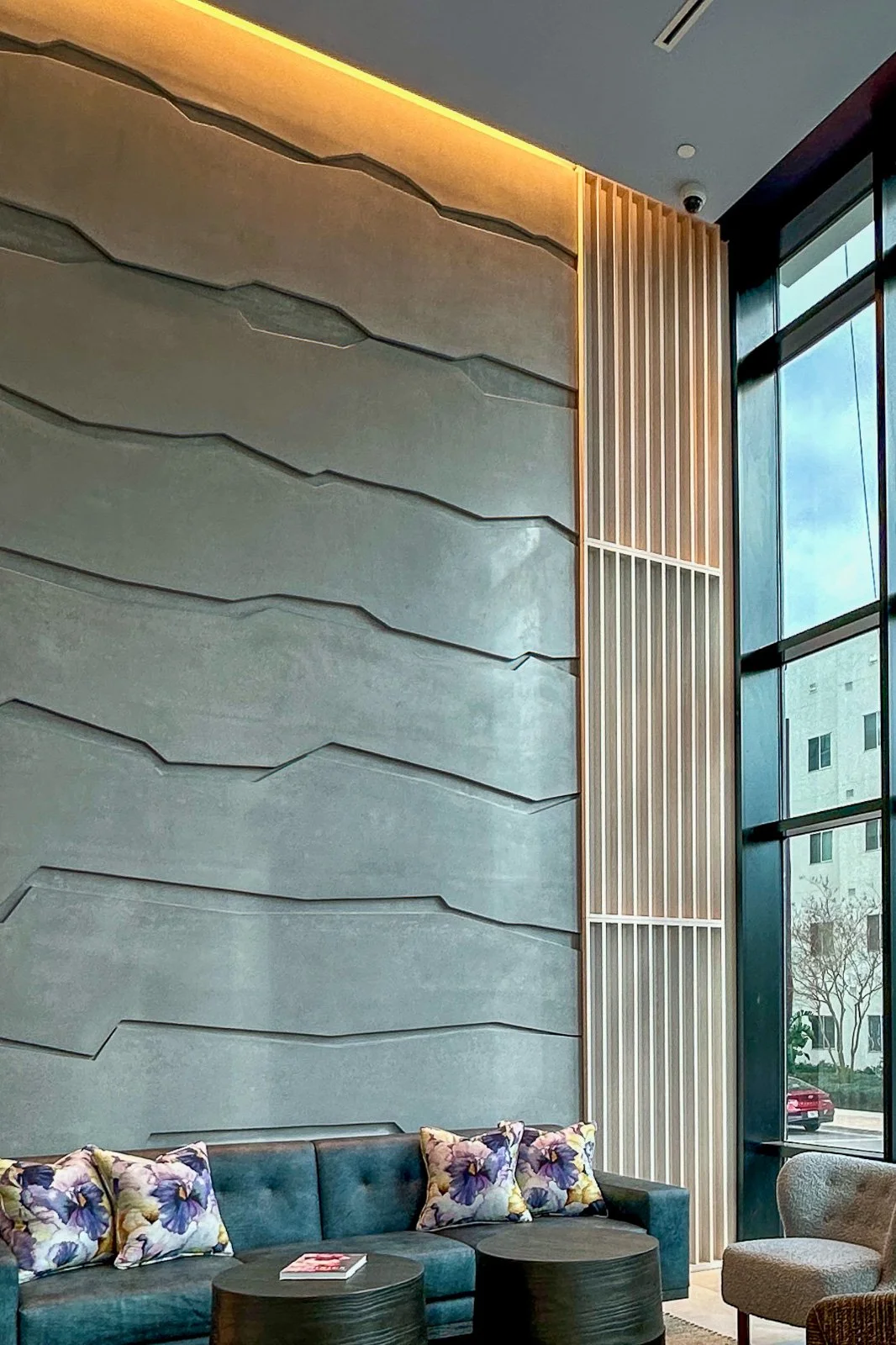
vertical
Architectural Concrete Wall Panel Systems
Integrated surfaces for large-scale vertical transitions.
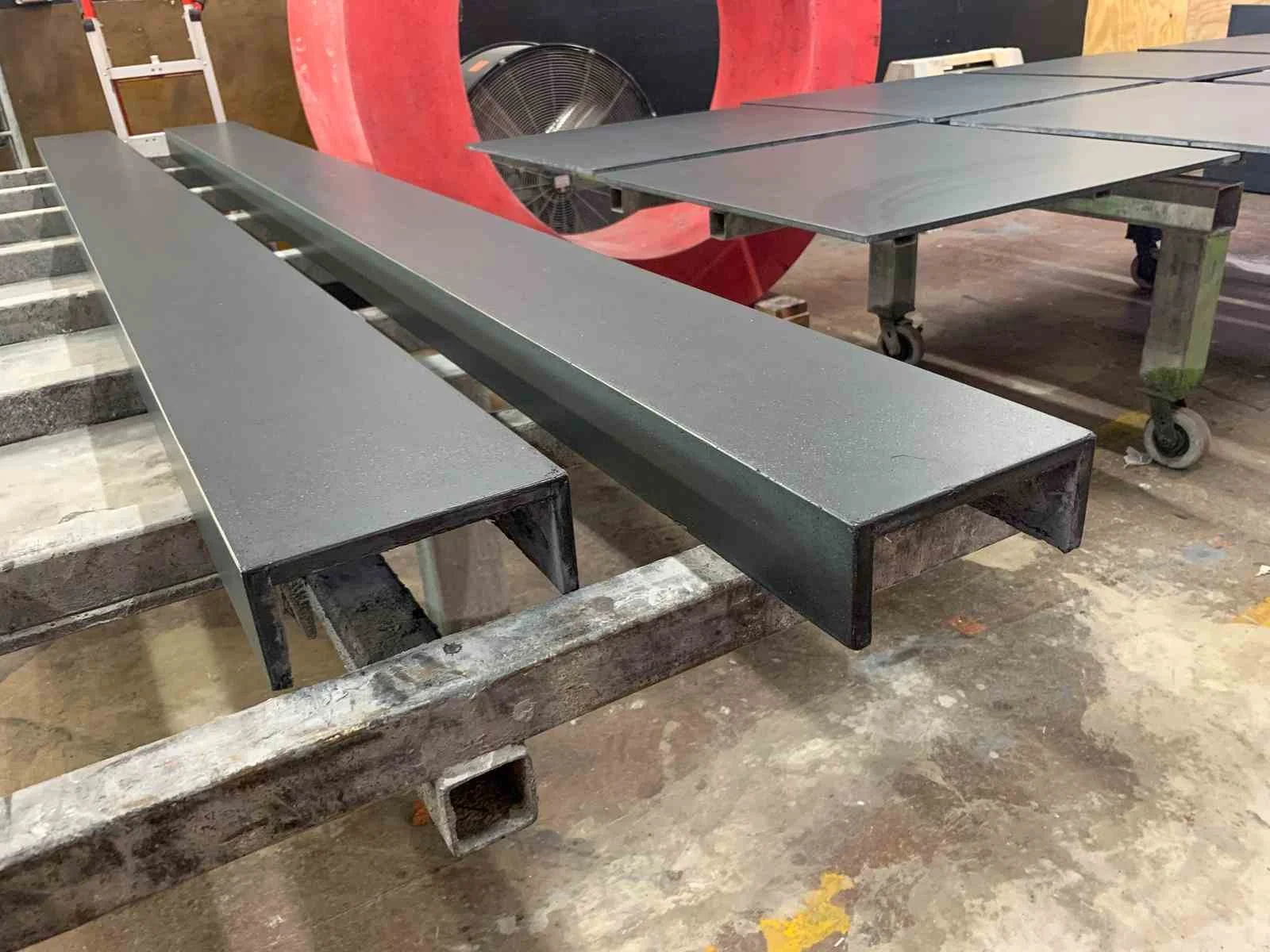
1/2” monolithic wall caps with returns
1/2” wall panels
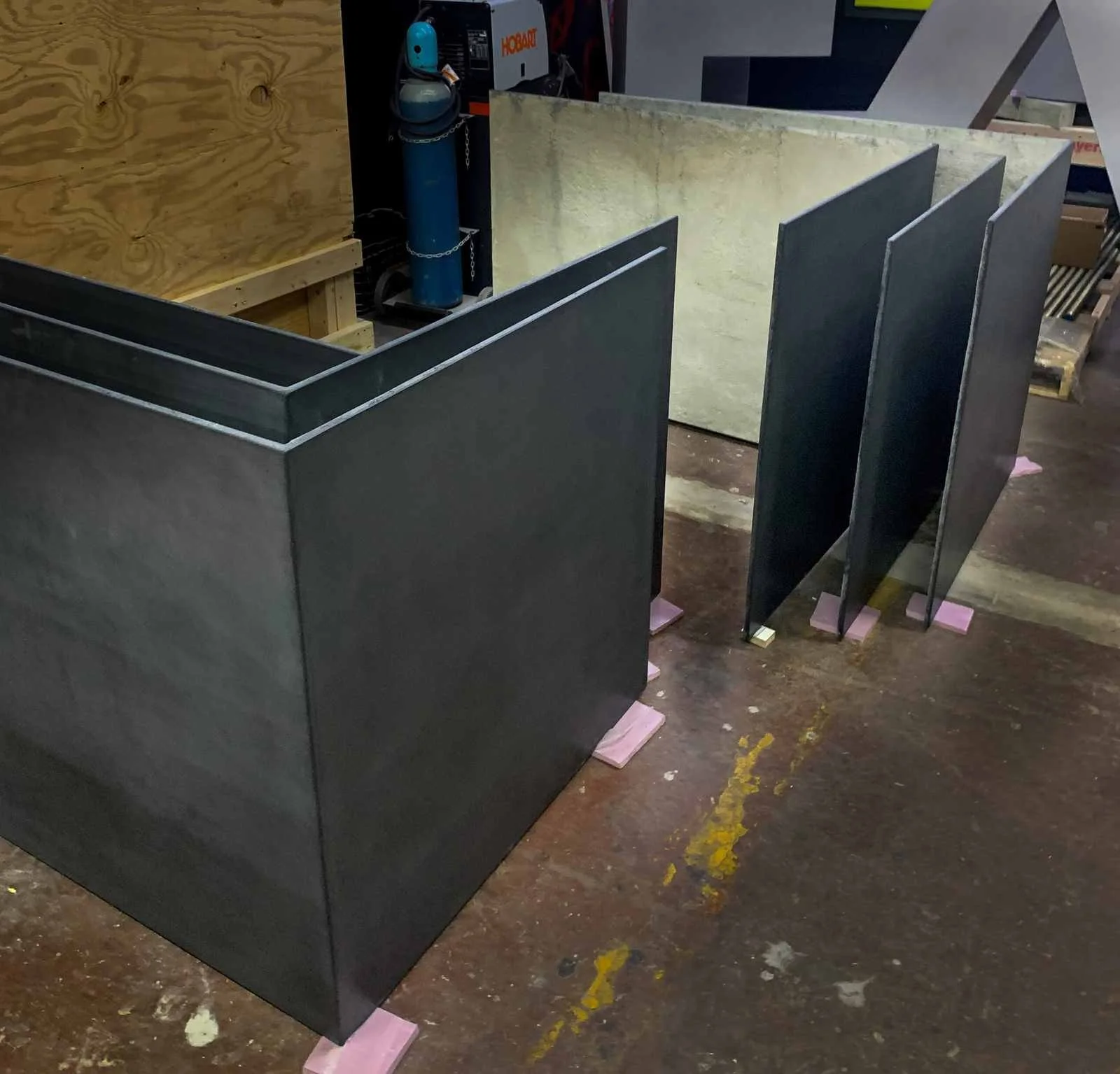
1/2” large format monolithic corner returns
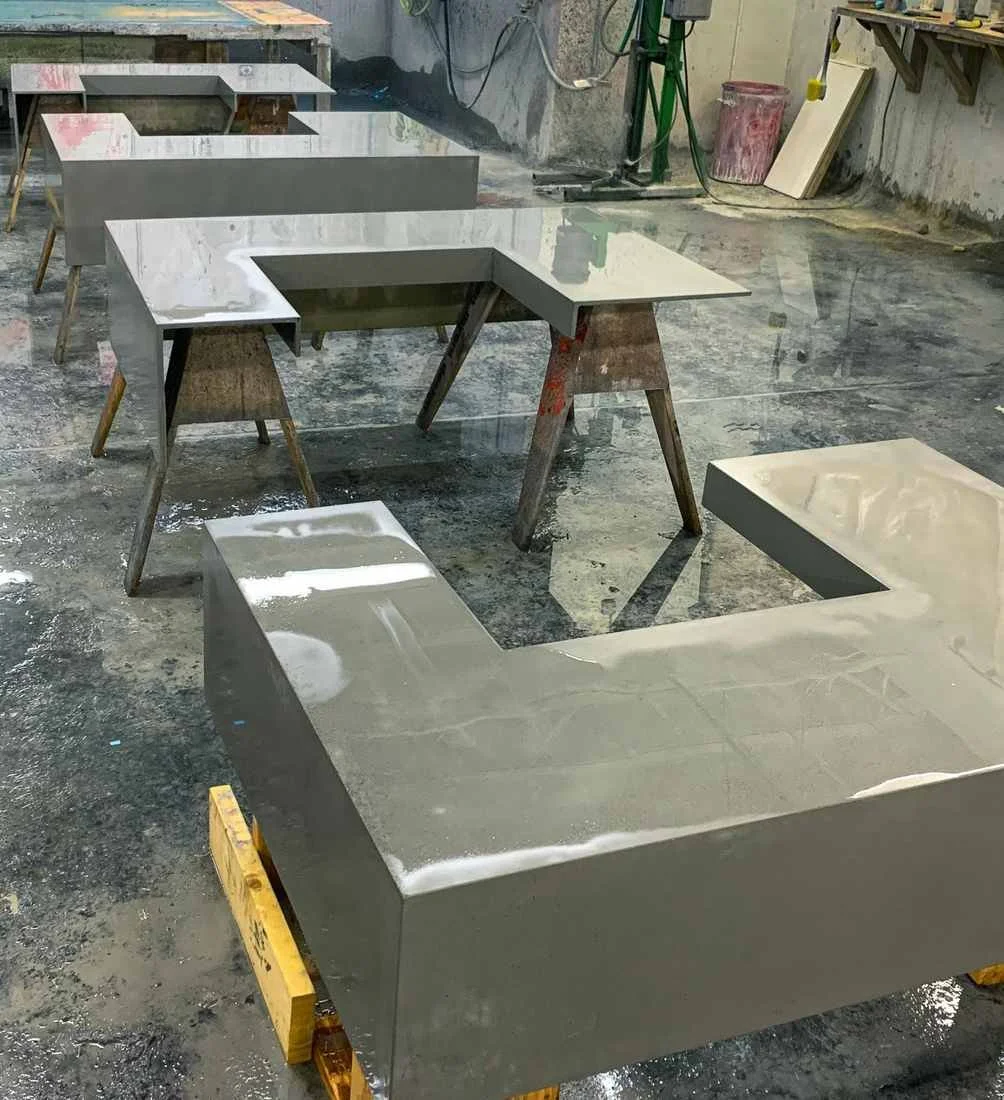
1/2” monolithic with returns
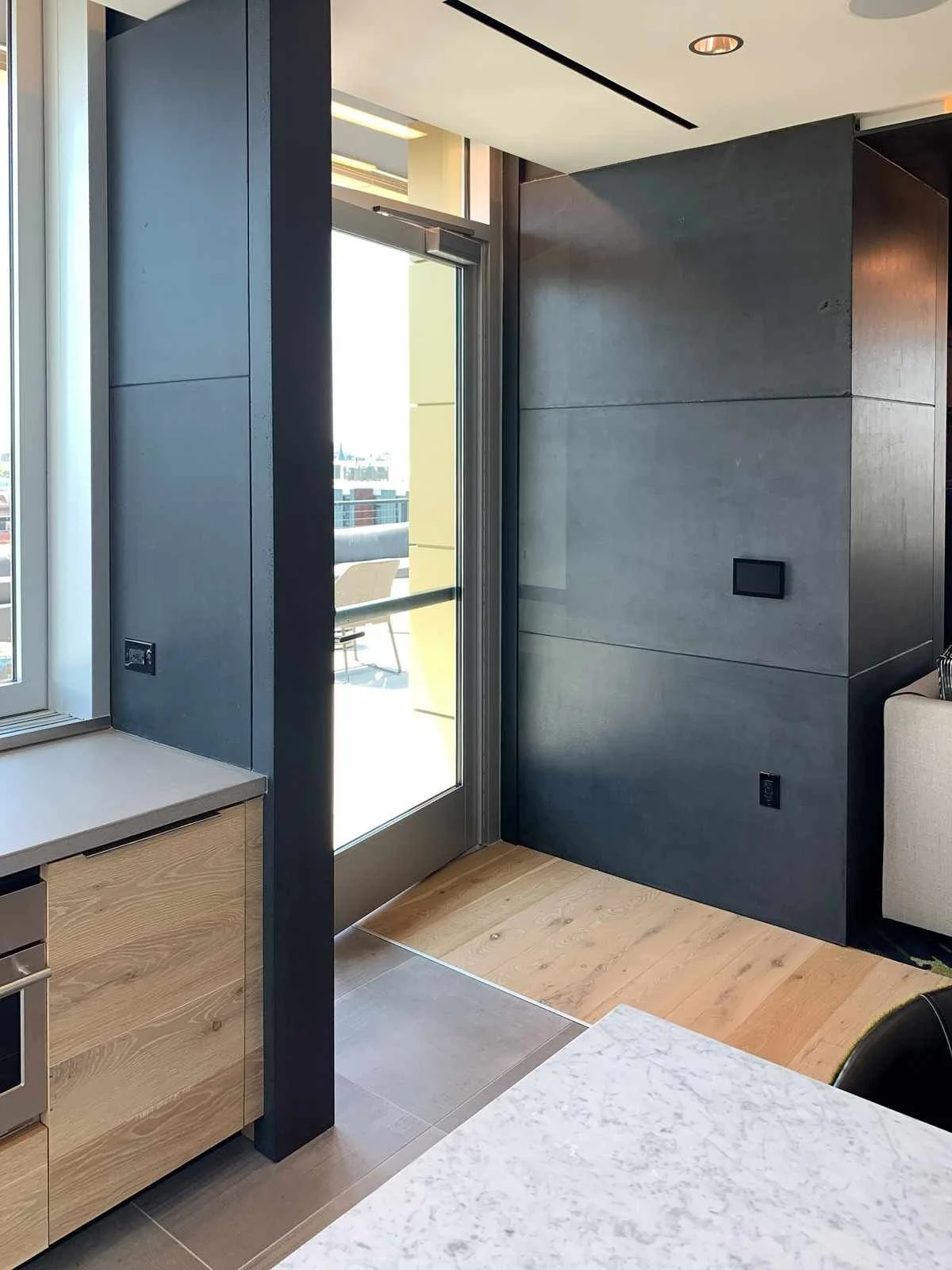
Washington, D.C.
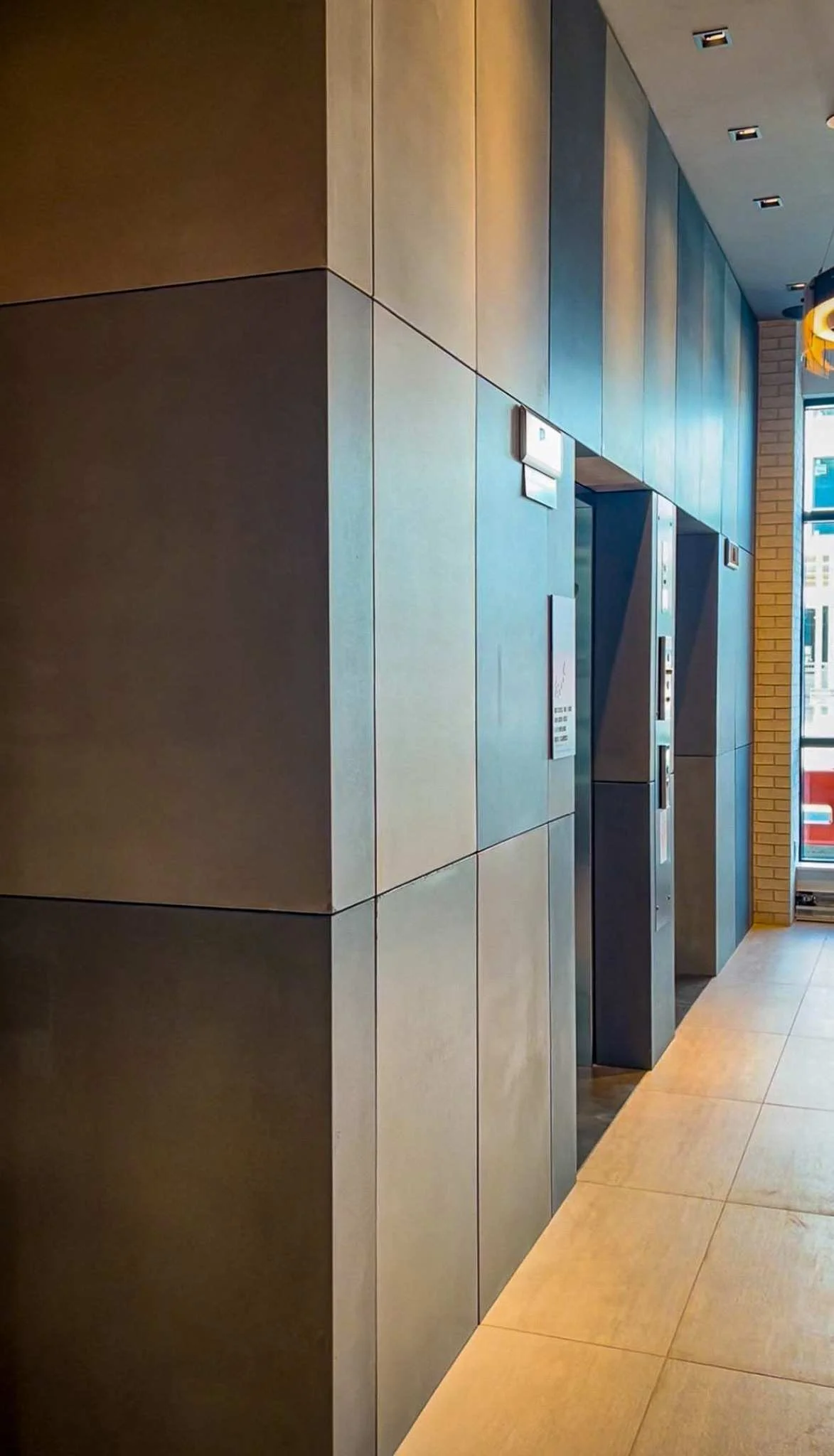
1/2” monolithic wall panels with returns
Boston, MA
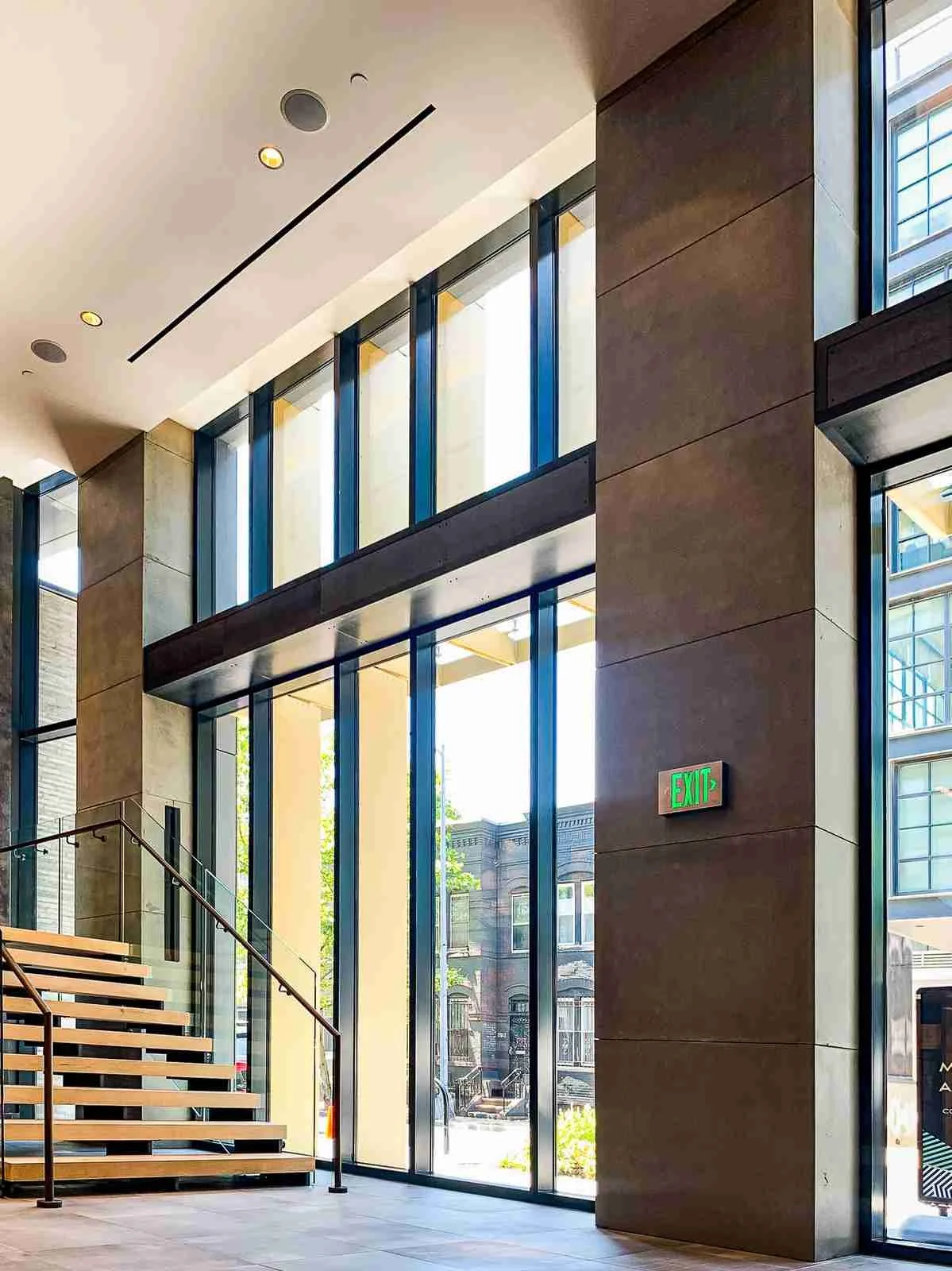
1/2” monolithic column wraps
Washington, D.C.
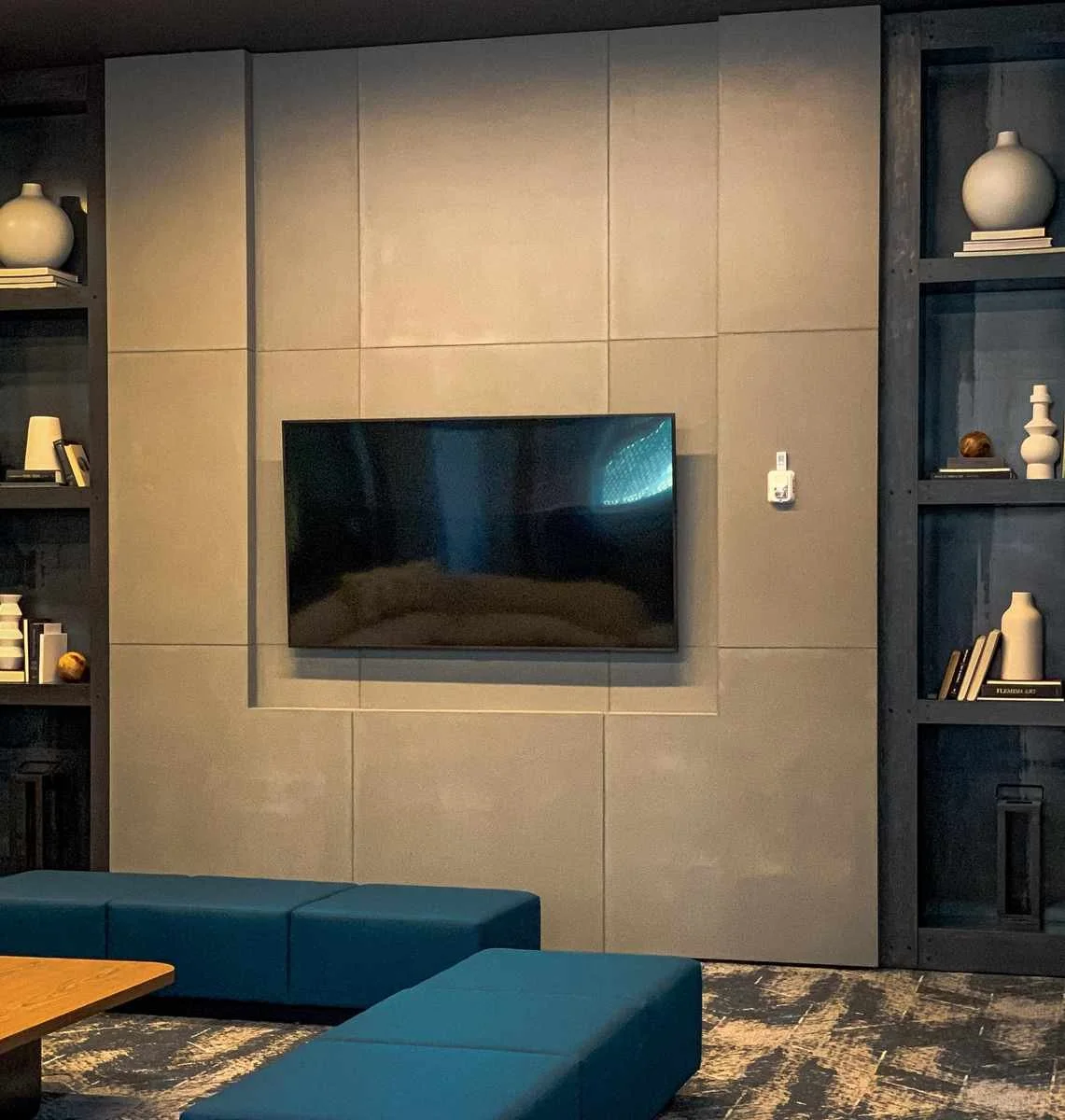
1/2” monolithic wall panels with returns
Loudoun, VA
INSTALLATION
Most installation problems begin long before installation.
The system is designed from the finished condition backward — allowing complex transitions, corner conditions, column wraps, seams, and installation sequences to be resolved before the first piece is cast.
The objective is simple:
reduce field variables as much as possible.
Concrete wall systems are often perceived as heavy, slow, and difficult. Especially at architectural scale. Large panels, integrated returns, and monolithic surfaces create immediate assumptions about complexity.
The opposite became the focus.
Every decision within the system is intended to simplify installation while maintaining continuity across the finished surface.
Complexity is handled in the studio.
Not improvised on site.
Once dimensions are verified, difficult conditions are resolved before delivery to reduce cuts, delays, and field modification during installation.
The installation methodology intentionally avoids dependency on specialized systems whenever possible.
Materials remain accessible.
Methods remain straightforward.
Execution remains fast.
Final surface on delivery.
No secondary finish.
No specialty hardware.
Minimal field work.
Sealed, not assembled.
CASE STUDY
The Laureate — Washington, DC
Existing structural columns were significantly out of plumb and out of square. Rather than reframing the surrounding architecture, prefabricated concrete wrap systems were developed to resolve the condition while maintaining clean geometry, minimal seams, and rapid installation within an active construction environment.
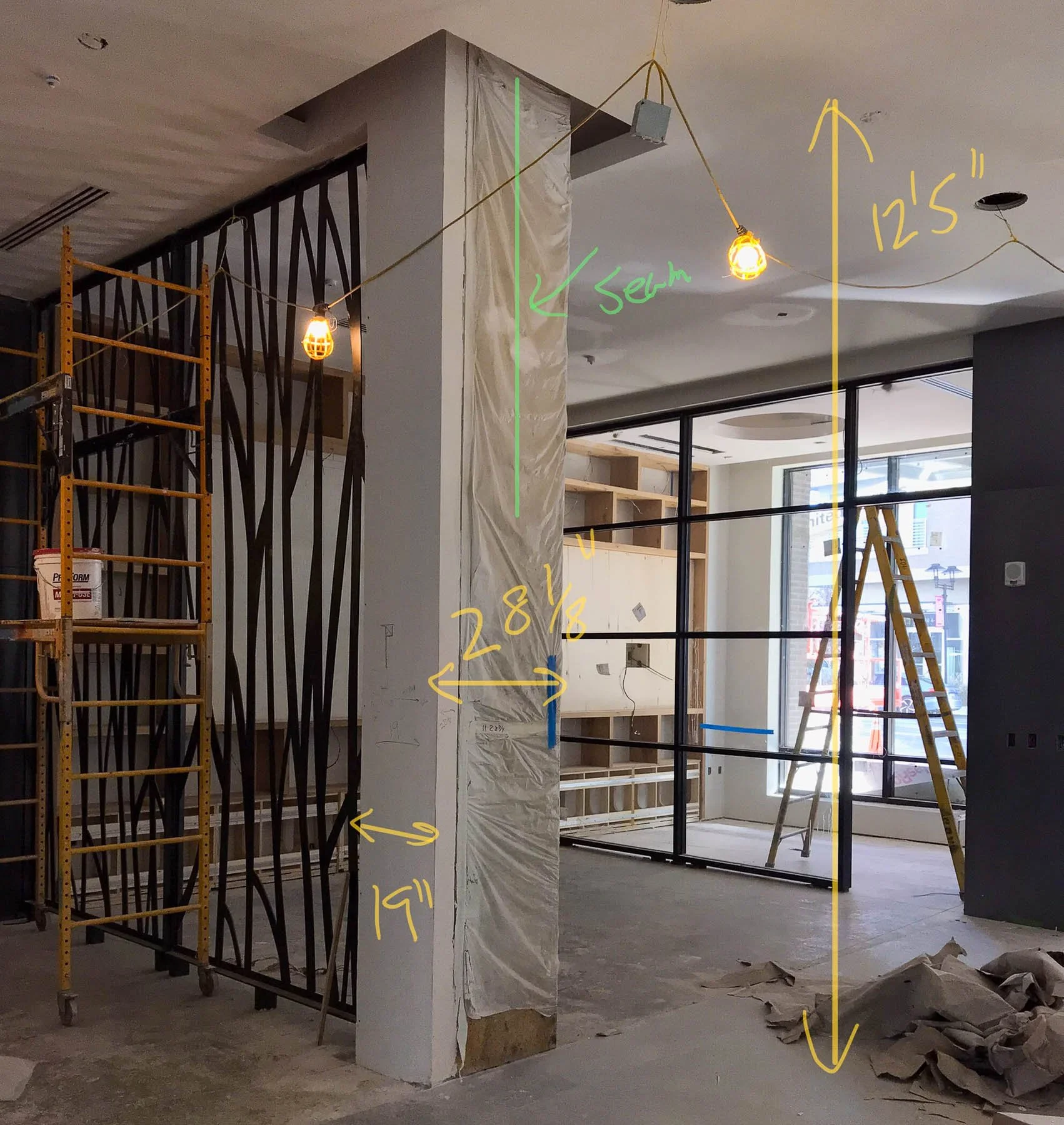
field measurements
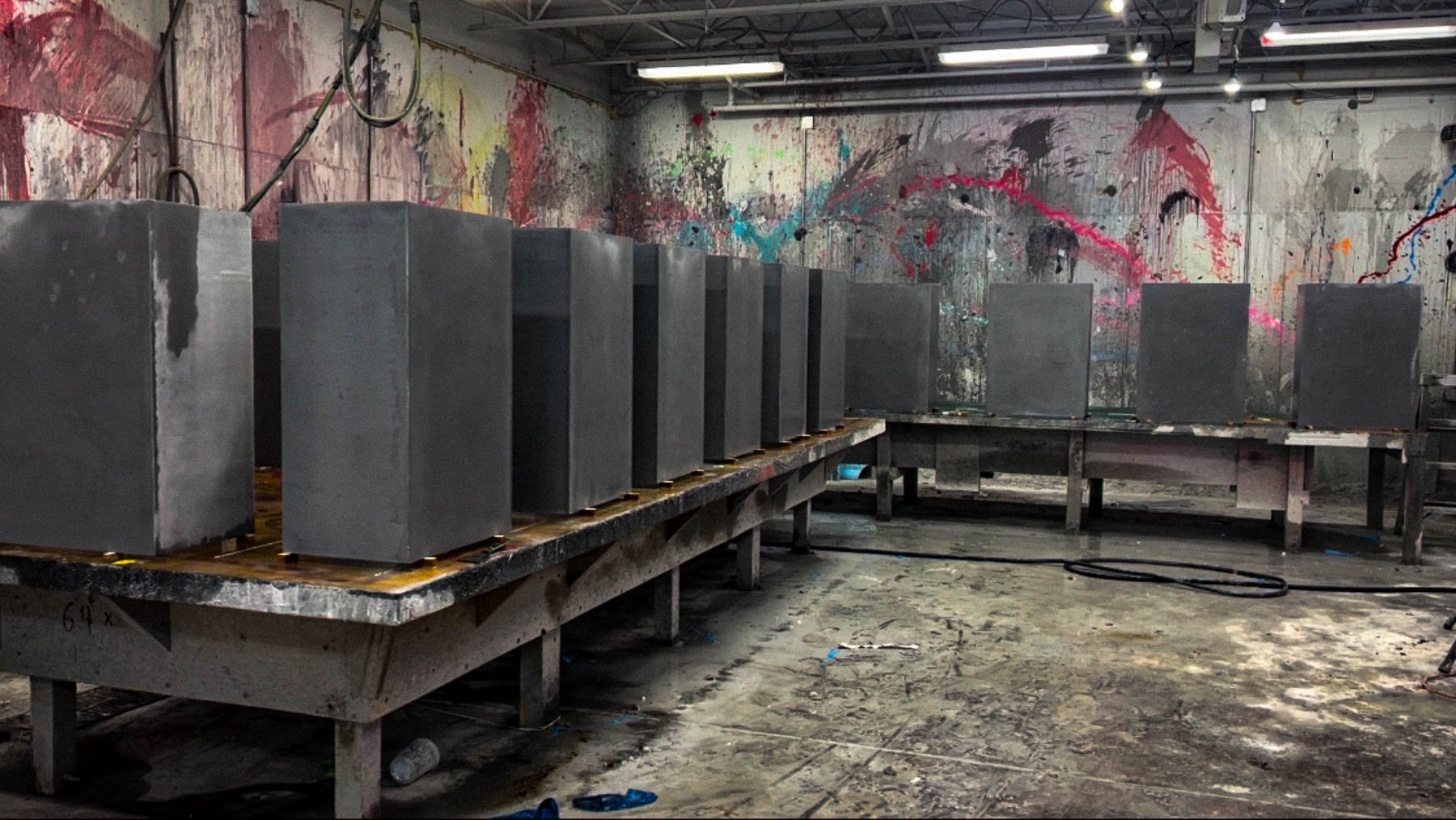
column wraps after hot wash
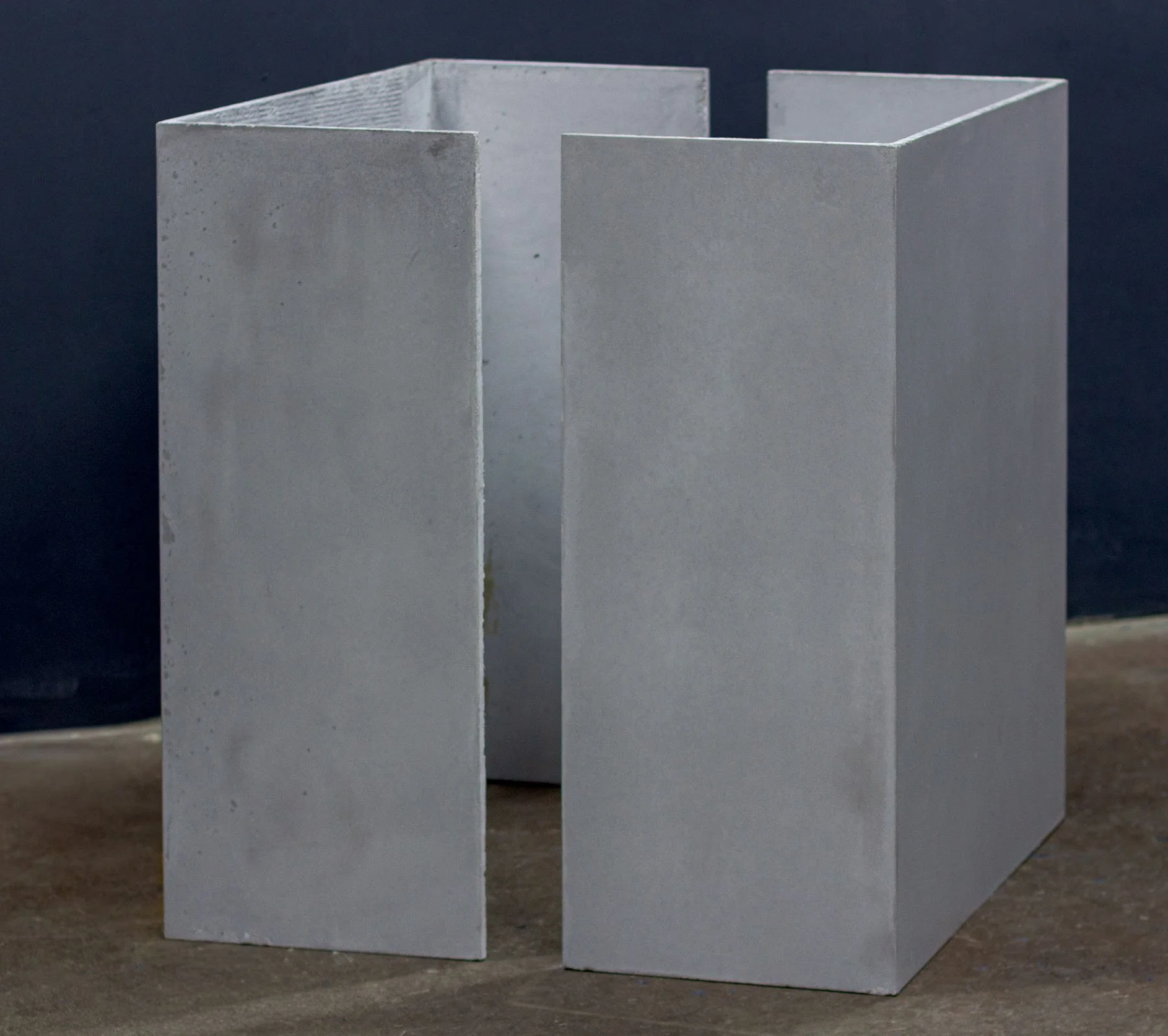
column wrap system
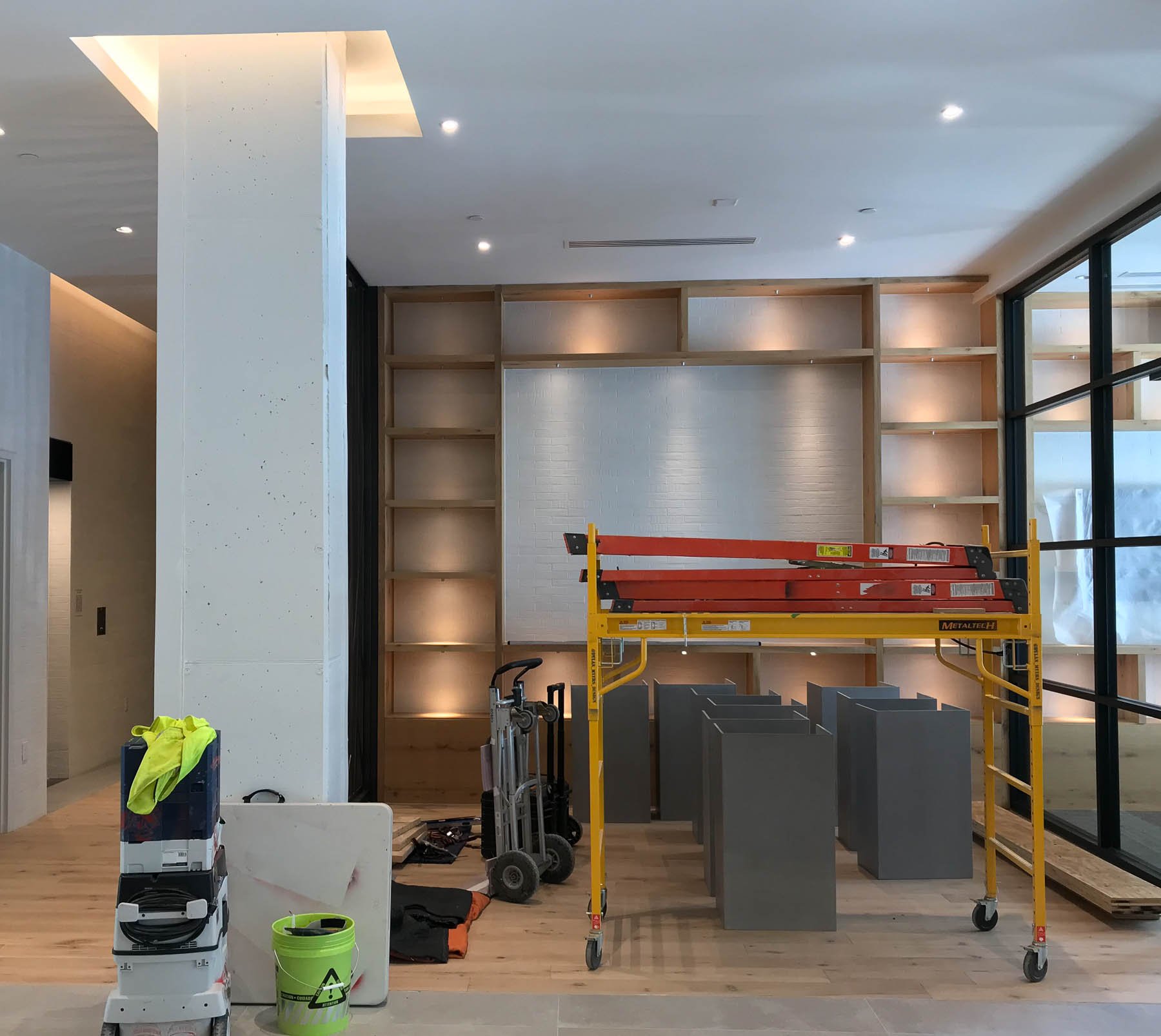
installation staging
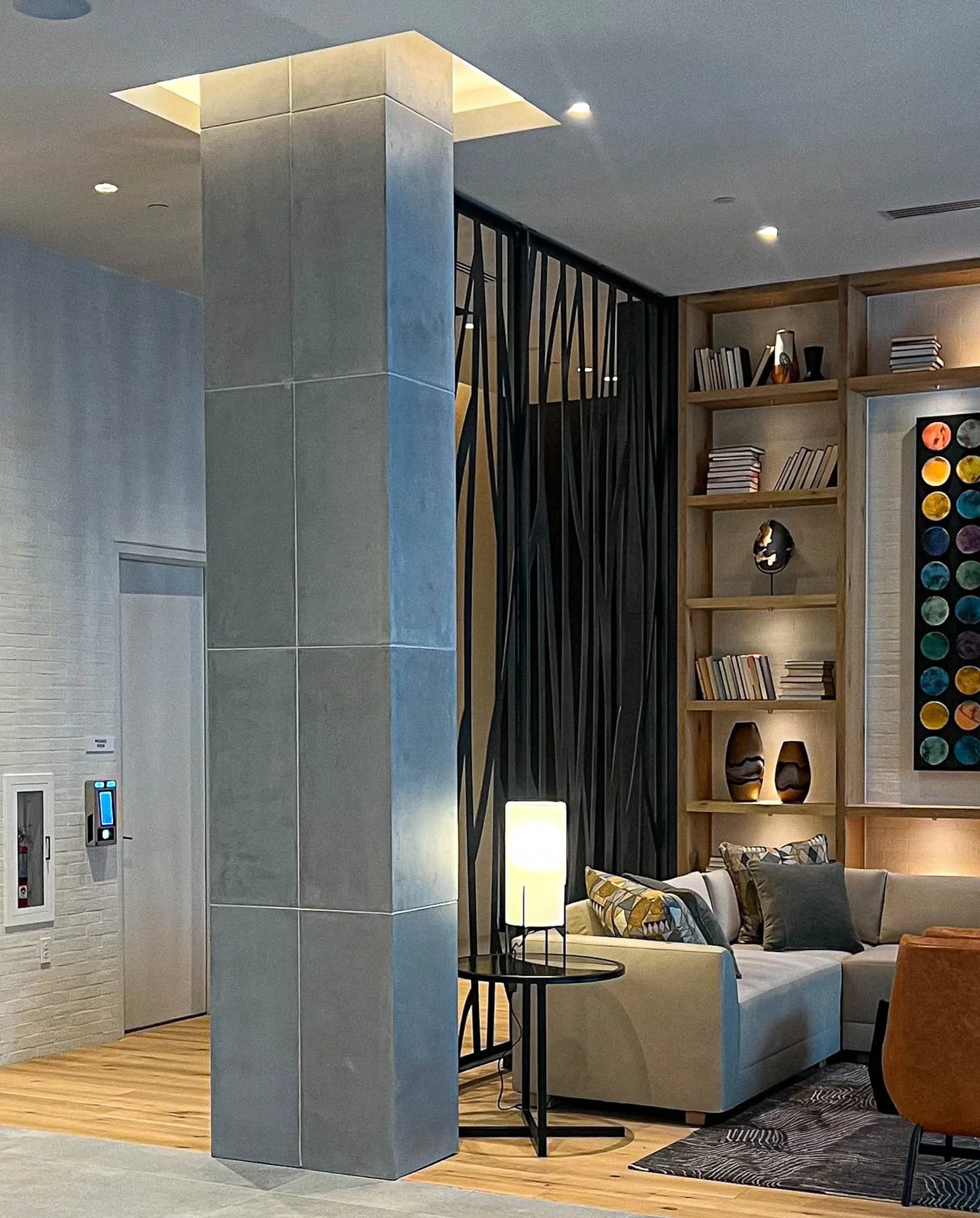
installed
These systems represent the architectural scale of our material practice. View the full progression of integrated and sculptural projects.
Each project is developed in response to context and scale.
Some paths require a shift.