
STRENGTH
STRENGTH
Material performance is designed into the object.
The Concrete Anomaly develops thin-section architectural concrete around the demands of each object—geometry, span, support condition, handling, exposure and intended use.
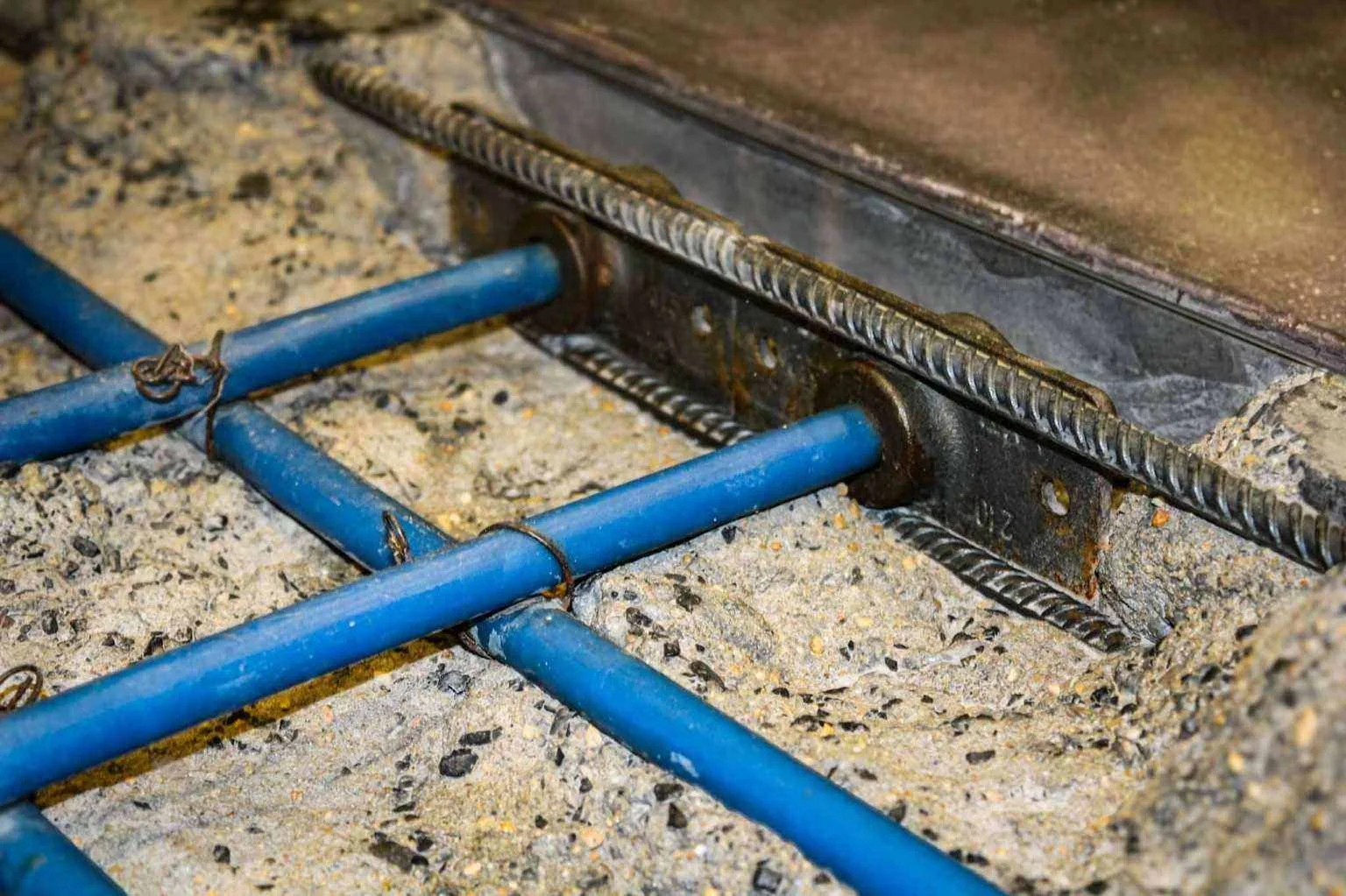
Our proprietary high-performance GFRC matrix combines exceptional material performance with non-corrosive reinforcement systems and engineered section geometry. The formulation and fabrication methodology remain proprietary. What matters is the performance of the finished object.
11,000+ PSI
COMPRESSIVE PERFORMANCE
2,100+ PSI
FLEXURAL PERFORMANCE
These conservative material-system baselines derive from published 28-day testing of the underlying GFRC system. They are not independent tests of every TCA production mix or load ratings for finished assemblies. Geometry, reinforcement, aggregate, curing and fabrication conditions affect the work.
ENGINEERED AS A SYSTEM
Strength is more than compressive strength.
Thin-section architectural concrete is governed by the relationship between material performance, geometry, flexural behavior, reinforcement and support conditions.
Returns, ribs and changes in section depth can dramatically increase stiffness without requiring excessive mass. Non-corrosive reinforcement is incorporated where required for handling, span and service conditions.
Every element is considered as a complete assembly rather than simply a piece of concrete.
THIN SECTION. LONG SPAN.
A representative design analysis considers a 96-inch span with a 1.25-inch section, structural returns and non-corrosive composite reinforcement. This calculated example is not a universal tested span or load rating.
Engineering analysis considers self-weight, bending moment, flexural stress and service-level deflection based on the geometry and support conditions of the individual object.
Project-specific requirements are evaluated during development.
HAND PROCESSED
Every TCA surface is individually hand processed with close attention to edges, transitions, texture and visual consistency.
Following mechanical processing and finishing, the concrete receives a controlled hot-water acid wash and muriatic etch. This removes residual surface contamination and creates a clean, microscopically open profile before final rinsing, neutralization and drying.
The process prepares the concrete for its final protective system while revealing the material beneath it.
PROTECTED FOR SERVICE
Finished surfaces are protected with a low-sheen, two-component, water-based aliphatic polyurethane sealer that provides resistance to staining, abrasion and UV exposure.
Protective sealing is separate from integrated pigment and mineral variation. Suitability and care depend on the work, its exposure and its setting.
The concrete is not simply cast and coated.
It is progressively processed, profiled, cleaned and protected for long-term service.
TECHNICAL PERFORMANCE
Detailed material information, representative long-span engineering analysis, calculated section properties, service-load behavior and technical design basis are available in the TCA STRENGTH technical document.
DOWNLOAD STRENGTH — TECHNICAL PERFORMANCE PDF
Performance information is provided for design development and general technical reference. Final suitability depends upon project-specific geometry, loading, support conditions, connections, exposure, handling and installation requirements. Where sealed calculations are required by contract documents or the authority having jurisdiction, project-specific review by the appropriate licensed design professional may be required.