
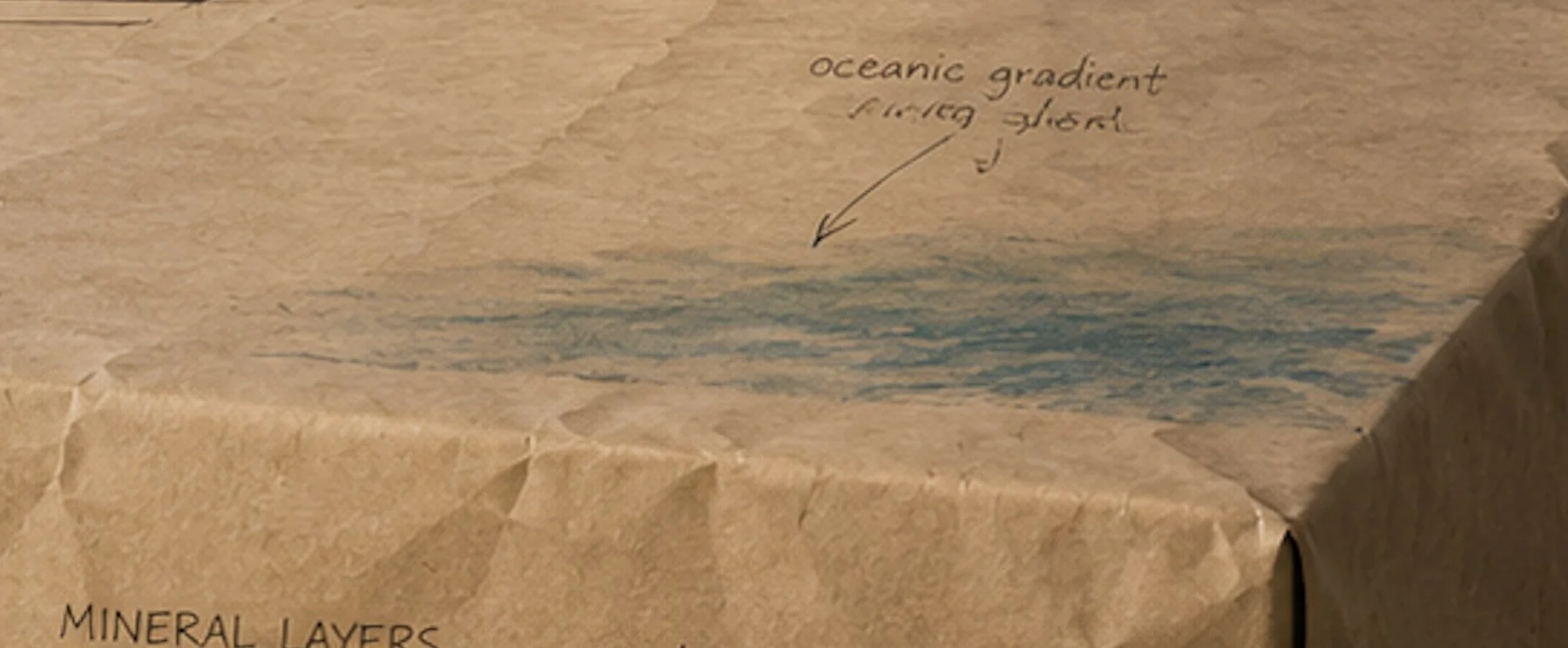
PAPER = CONDITIONS
CONDITIONS:
A systematic approach to my interrogation of the material itself.
Each condition represents a distinct material state discovered through process.
CON-fin.color+
[ CONDITION-finish.color (+) ]
CON-[fin].0000+
[ fin ] = primary condition.
The condition establishes the primary material expression. It defines how the surface is revealed, altered, refined, or preserved.
Examples:
Honed salt-and-pepper aggregate exposure, compressed or fractured surfaces, strata and washed raw finishes, degraded and weathered conditions, or highly refined smooth surfaces.
CON-fin.[ 0###](+)
[ 0###] = primary pigmented color.
Integrated color establishes the foundational material field from which all conditions emerge. Colors are documented through a numerical classification system.
Examples:
Demo Black, Gunmetal, Soft Pink, Lavender.
CON-fin.[ 0###](+)
[ 0 ### ] = Any character other than zero (0) signifies a secondary material condition or intervention introduced into the primary field.
Examples include oxidation, grout systems, mineral deposits, recycled aggregates, and other environmental or fabricated influences.
(+) = Flavor
Denotes additional material phenomena exhibiting light refraction, translucency, fluorescence, iridescence, or color-shifting behavior.
EXAMPLES FOR PERCEPTION:
Horizontal Systems
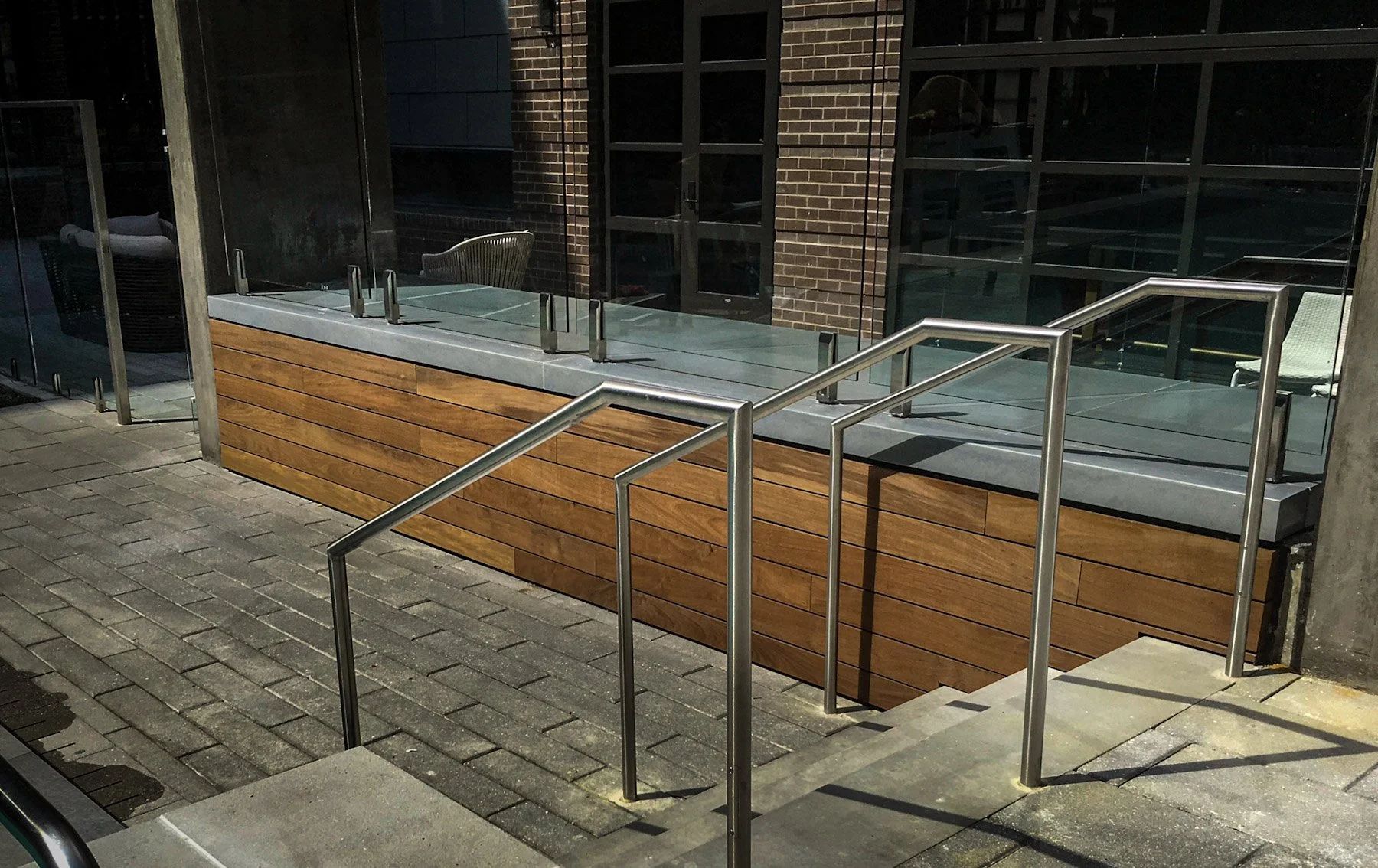
Exterior Pool Bar
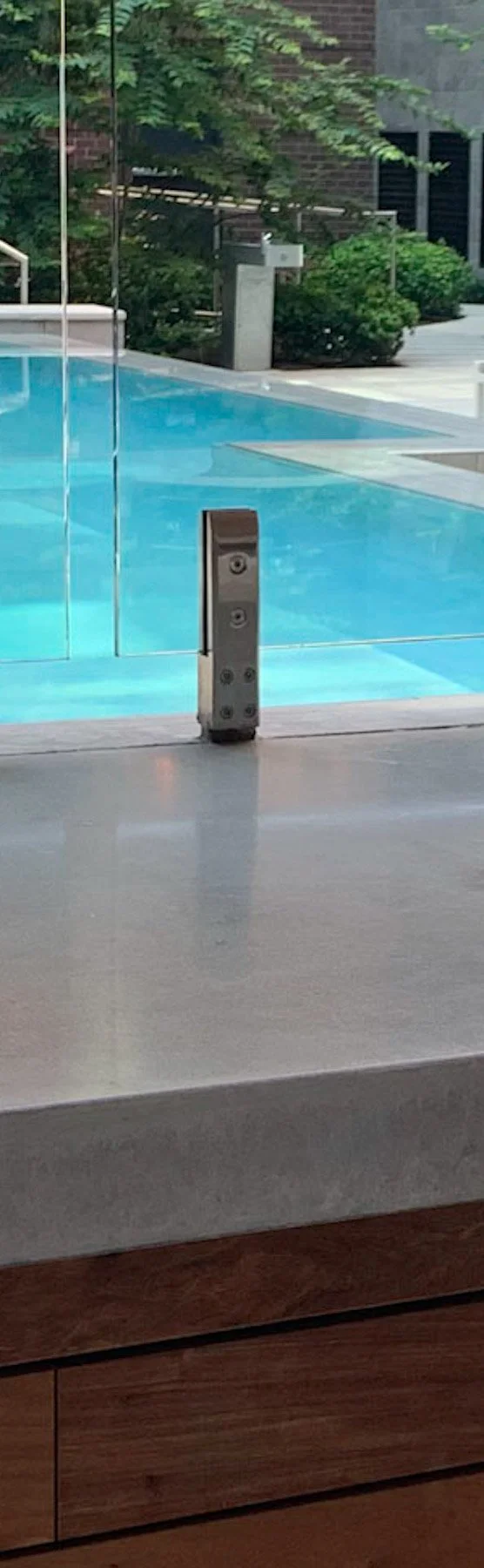
Developed in response to the surrounding pool environment and programmed nighttime lighting. Secondary blue mineral inclusions were proposed, reviewed with the design team, and approved prior to installation. From casting to installation, the entire intervention was completed within ten days.
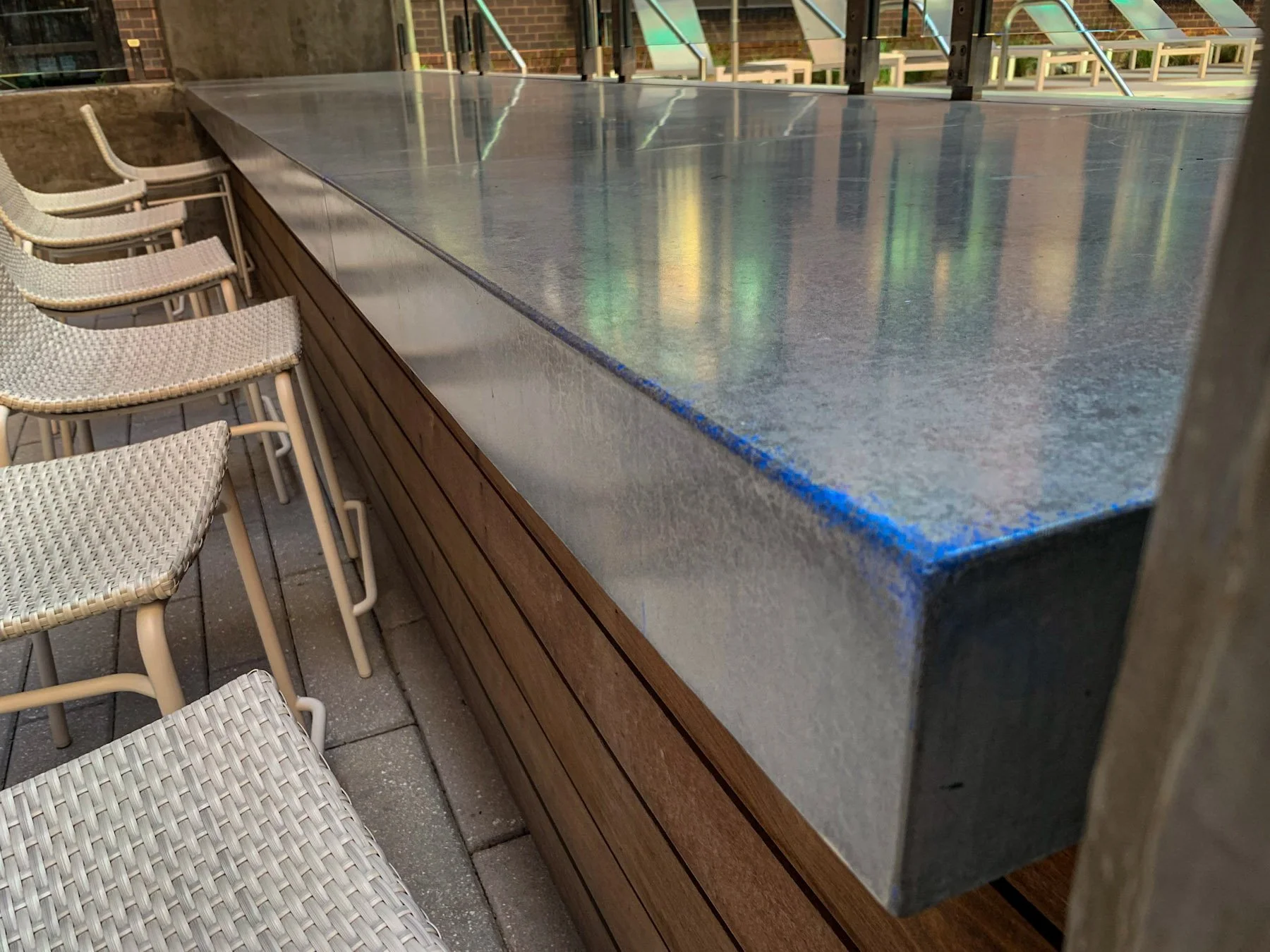
CON-slt.g227
Condition-
Honed Salt & Pepper = slt
Integrated color Silk = 0227
Secondary infusion = g ( electric blue)
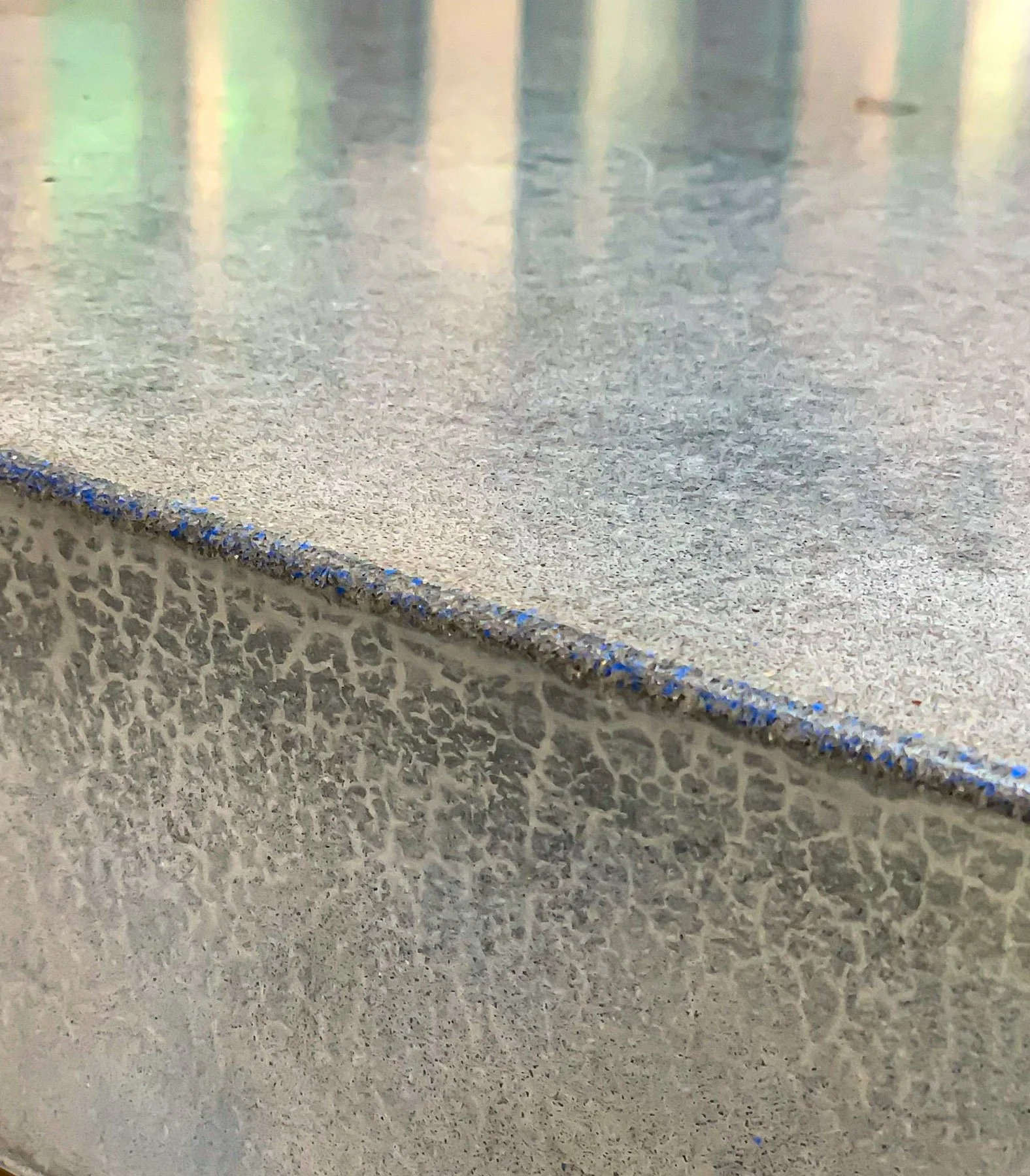
CON-slt.g227
VERTICAL SYSTEMS
Showroom Walls
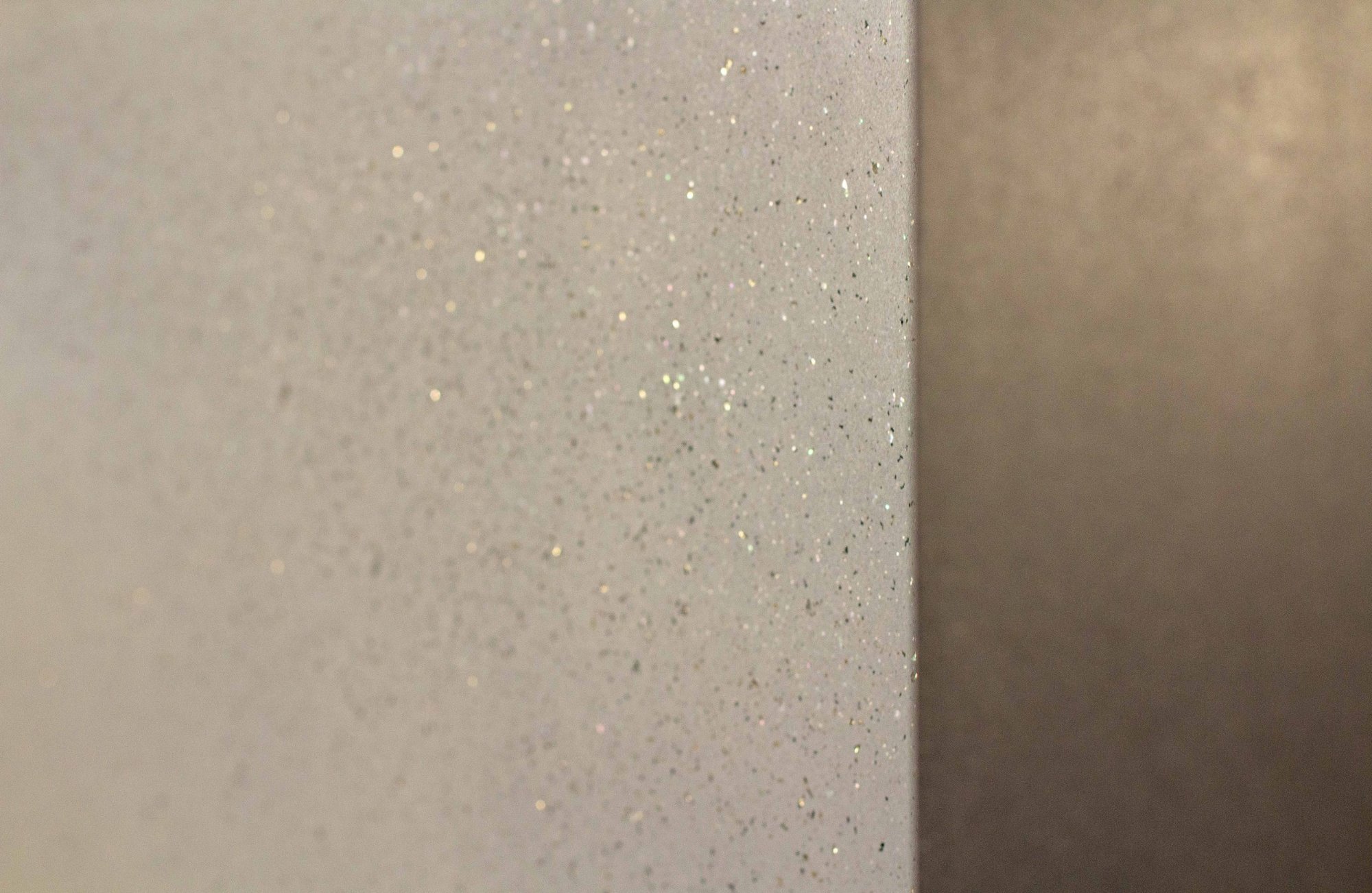
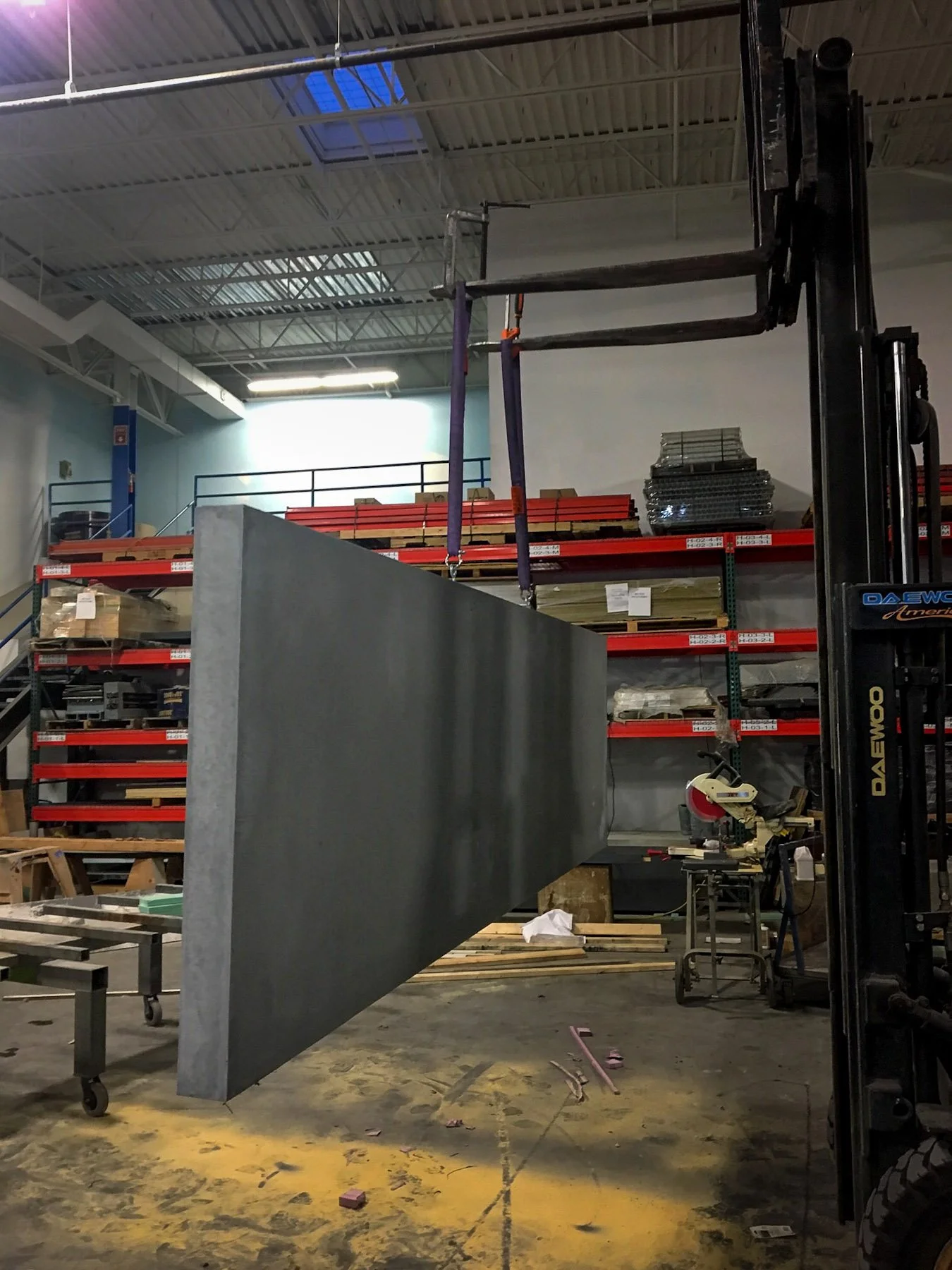
Vertical systems provide a continuous surface for observation. As light conditions shift throughout the day, the material responds accordingly. Secondary interventions (+) may be introduced to amplify these relationships, allowing each condition to evolve in response to architecture, light, and environment.
Condition-
Honed Salt & Pepper = slt
Integrated color soft tan = 0135
+ = mineral refraction
CON-slt.0135+
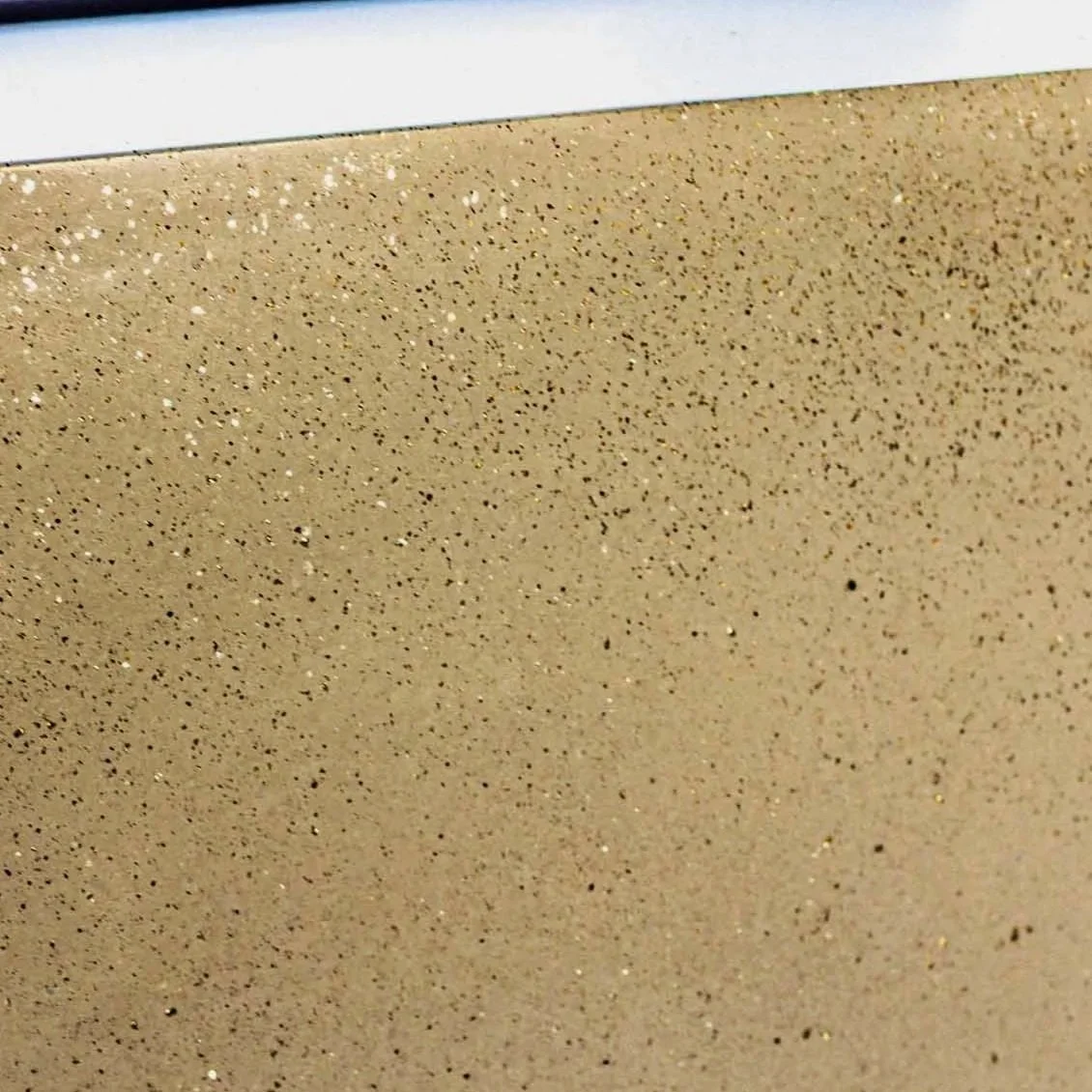
CON-slt.0135+
FURNISHINGS
Radius | CUBED
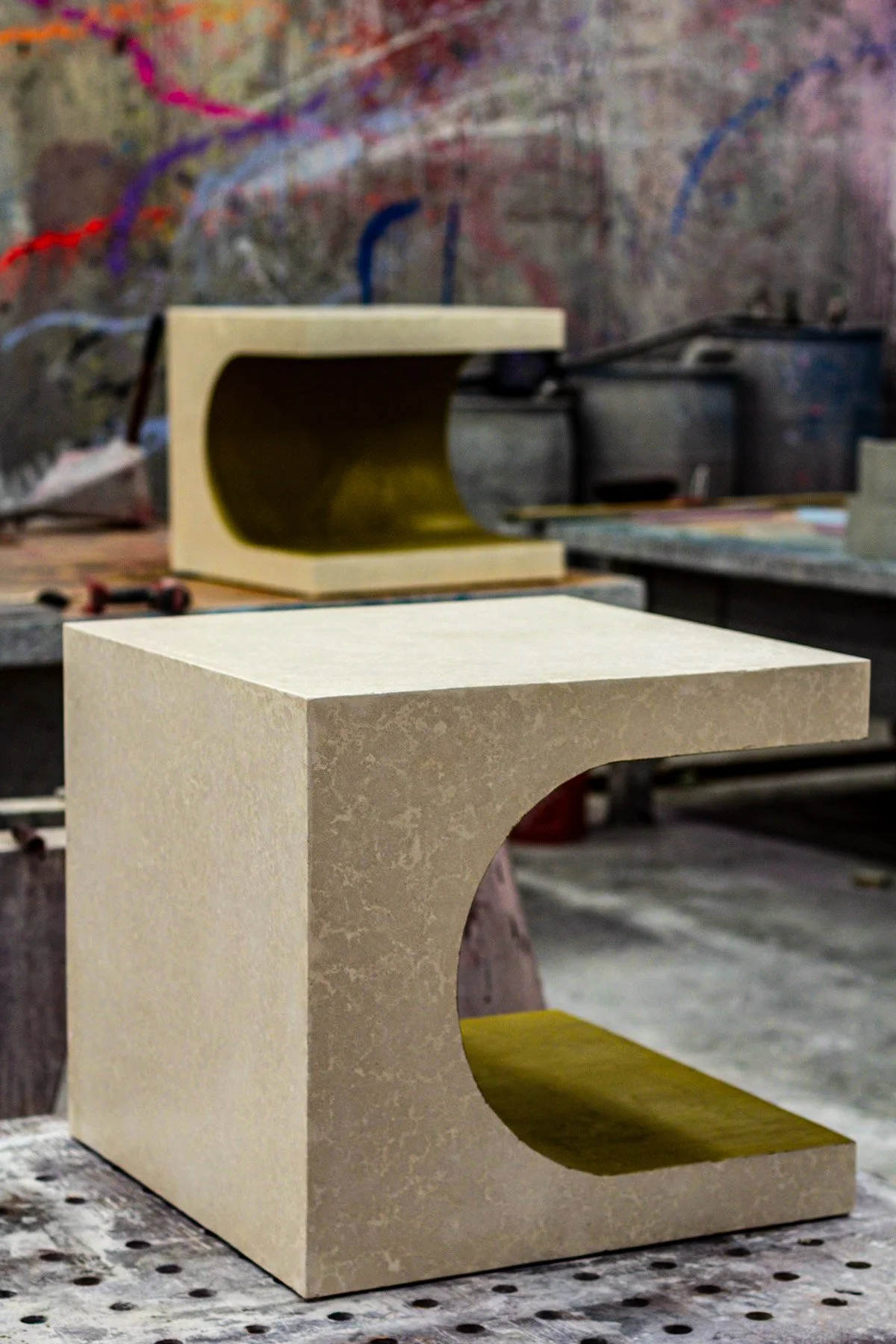
The shape remains constant while the condition evolves. Radius | CUBED demonstrates how a single form can contain multiple material states, allowing finish, color, and secondary interventions to fundamentally alter perception without changing geometry.
Condition-
Honed Crumbled = crb
Integrated color soft tan = 0119
Secondary Infusion = g ( bone )
+ = metalized brass
CON-crb.g119+
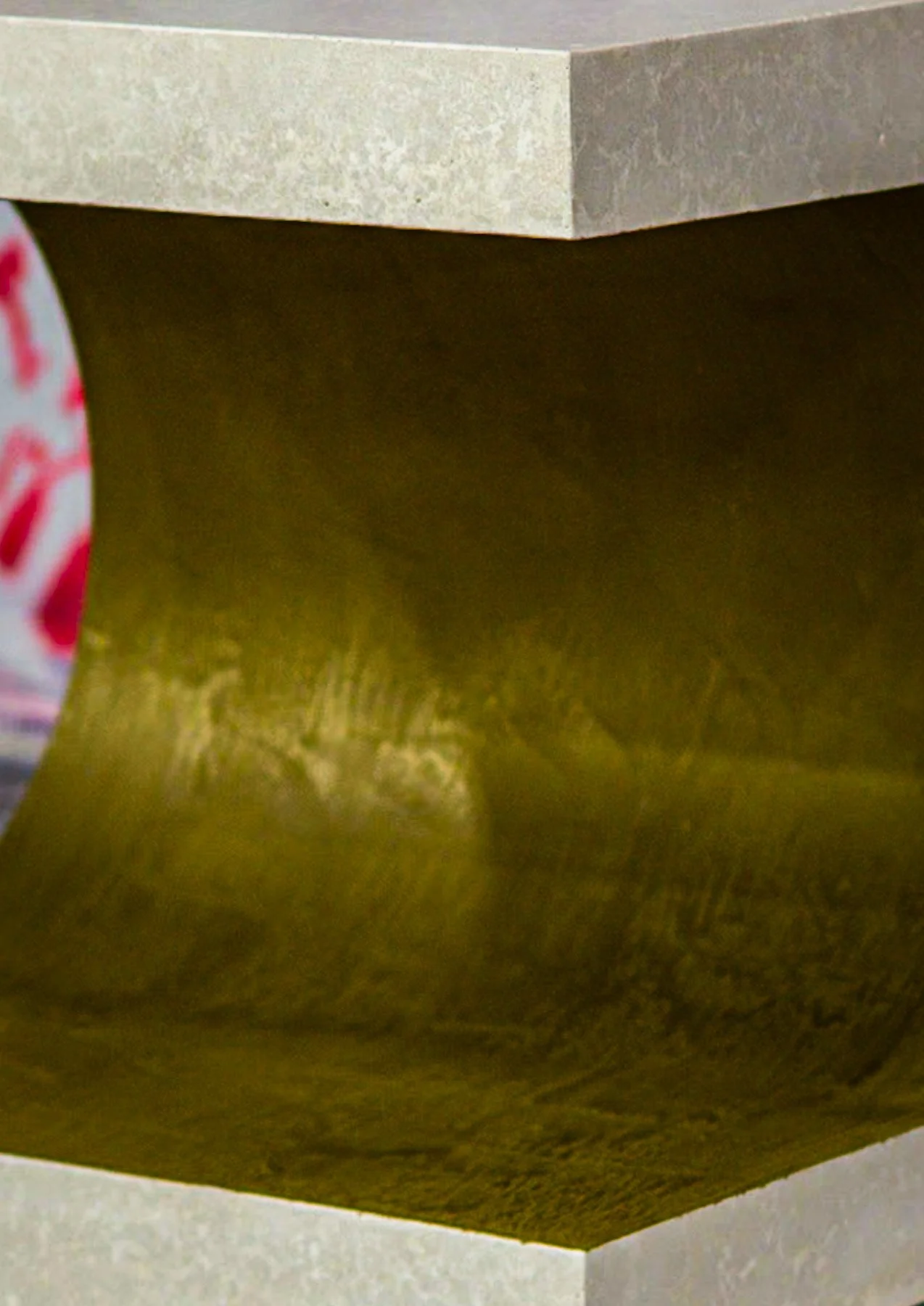
CON-crb.g119+
[ The archive is currently being conditioned for release. ]
The full archive will never be released.
It is too large and ever-expanding. The examples below are intended only as points of reference—guides for the journey ahead.
ENGINEERING & MATRIX PERFORMANCE
Material-system reference baselines: 11,000+ psi compressive strength and 2,100+ psi flexural strength. These conservative values derive from published 28-day testing of the underlying GFRC system; they are not independent test results for every TCA mix or a load rating for a finished assembly. Geometry, reinforcement, support, fabrication and exposure are resolved for each project.
Integrated pigment and mineral variation establish the material’s color. Protective sealing is a separate finishing step. Finished surfaces are protected with a low-sheen, two-component, water-based aliphatic polyurethane sealer that provides resistance to staining, abrasion and UV exposure.
Suitability, installation and care depend on the work and its setting.
The CONDITIONS archive documents custom architectural concrete finishes, surface treatments, material experimentation, and evolving concrete conditions developed through application, observation, and refinement.
Primary Finish Conditions
condition: raw
The material before refinement. Evidence remains. Texture remains. The condition is observed rather than corrected.
s = Strata layering, accumulation, and depth. The condition emerges through visible material succession.
w = Washed surface is reduced, leaving behind residual markings, deposits, and material memory.
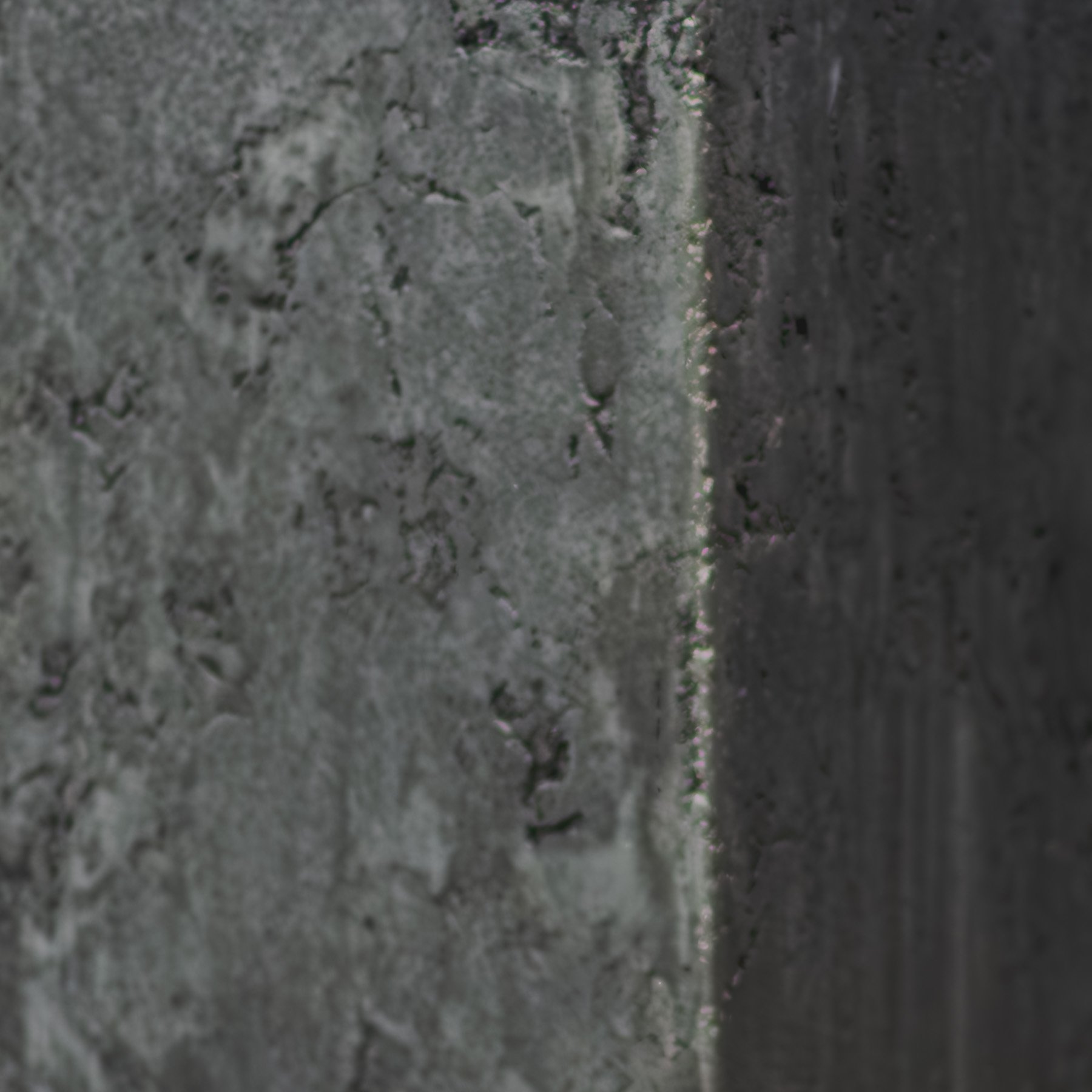
CON-raw.s305
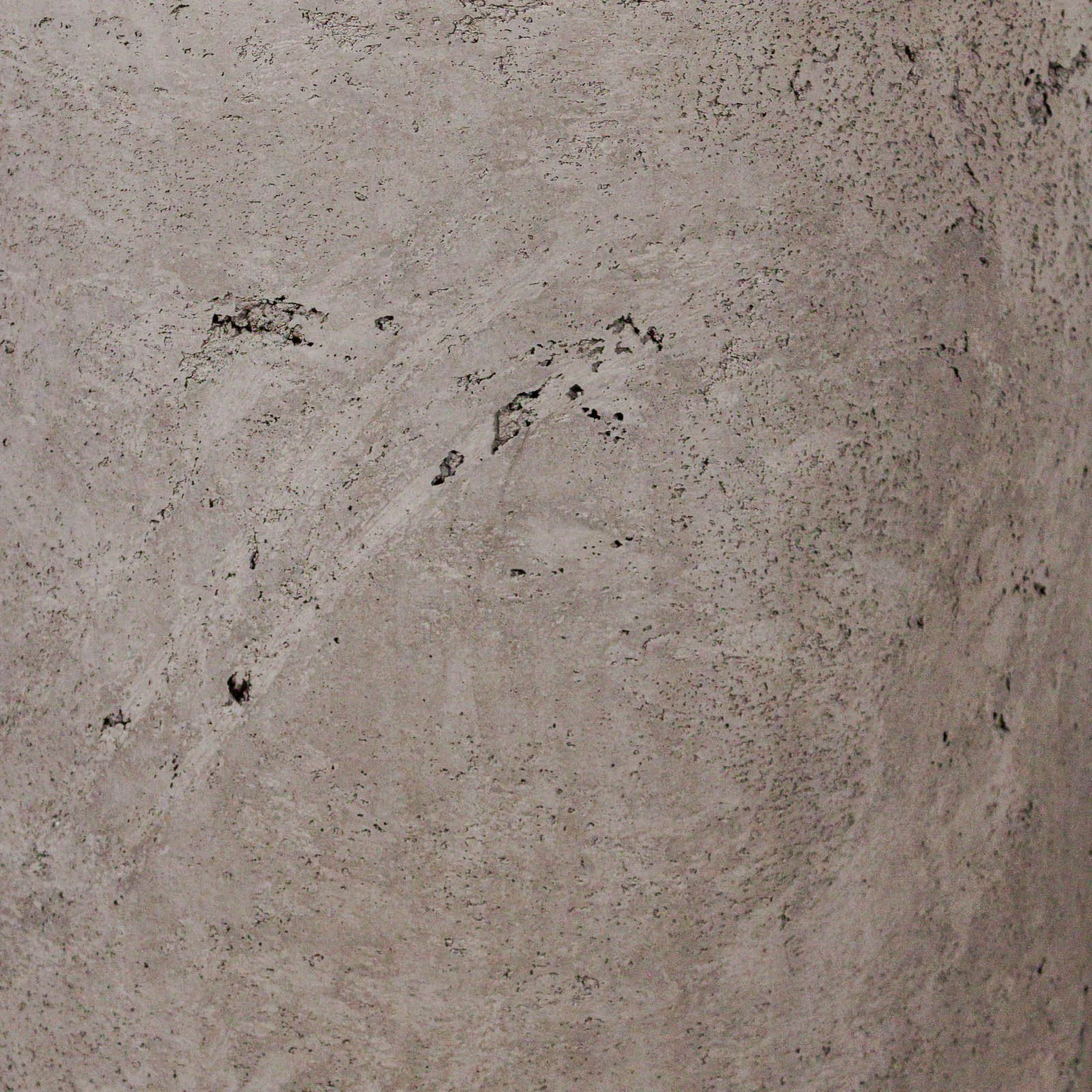
CON-raw.s209
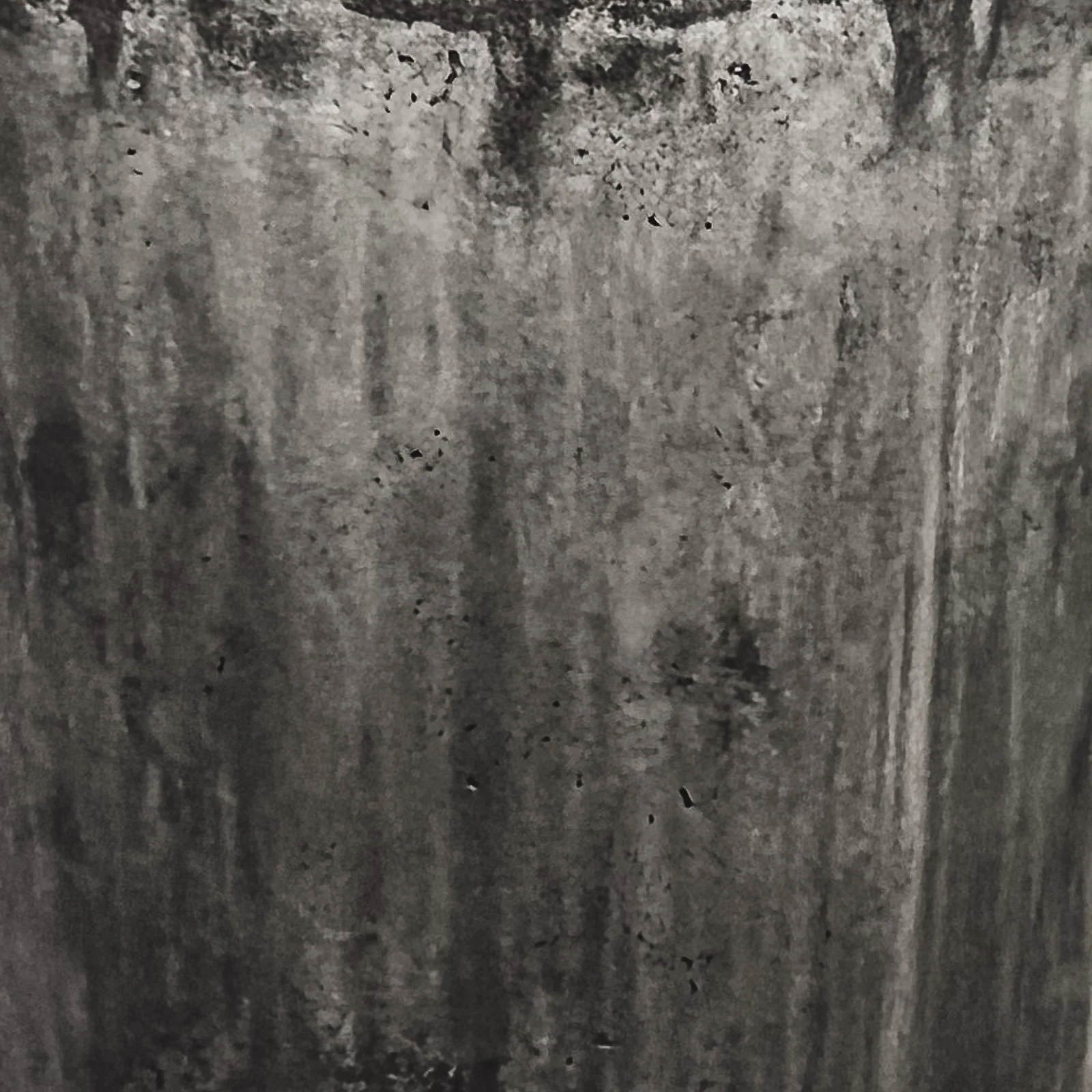
CON-raw.w305
condition: slt|ice
Refinement reveals mineral and aggregate influence previously concealed within the material. Exposed particulate matter establishes contrast, depth, and optical variation.
slt = Sand aggregate exposure.
Mineral contrast emerges through naturally occurring particulate variation.
ice = Recycled glass influence.
Light, translucency, and crystalline particulate presence become visible within the surface.
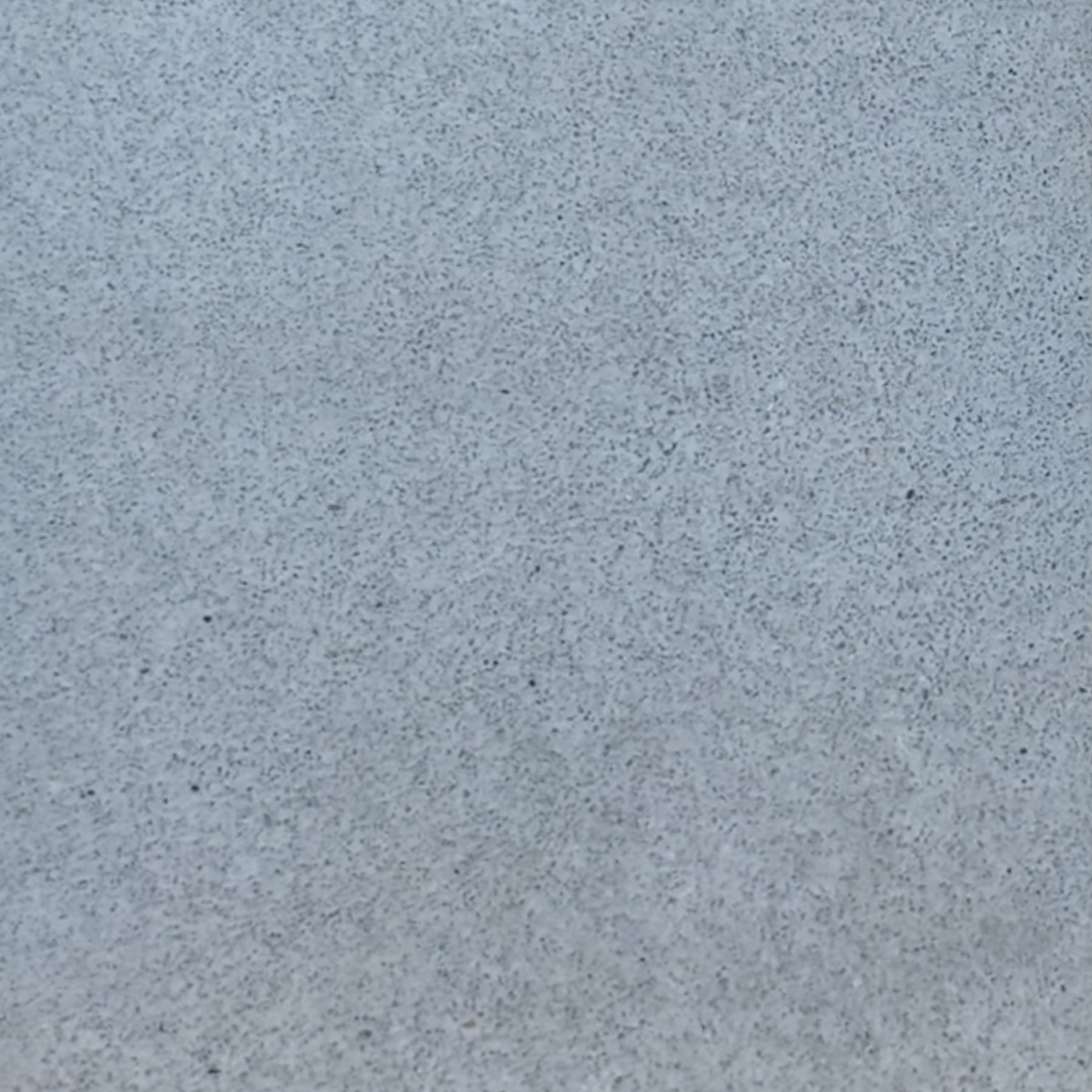
CON-slt.0303
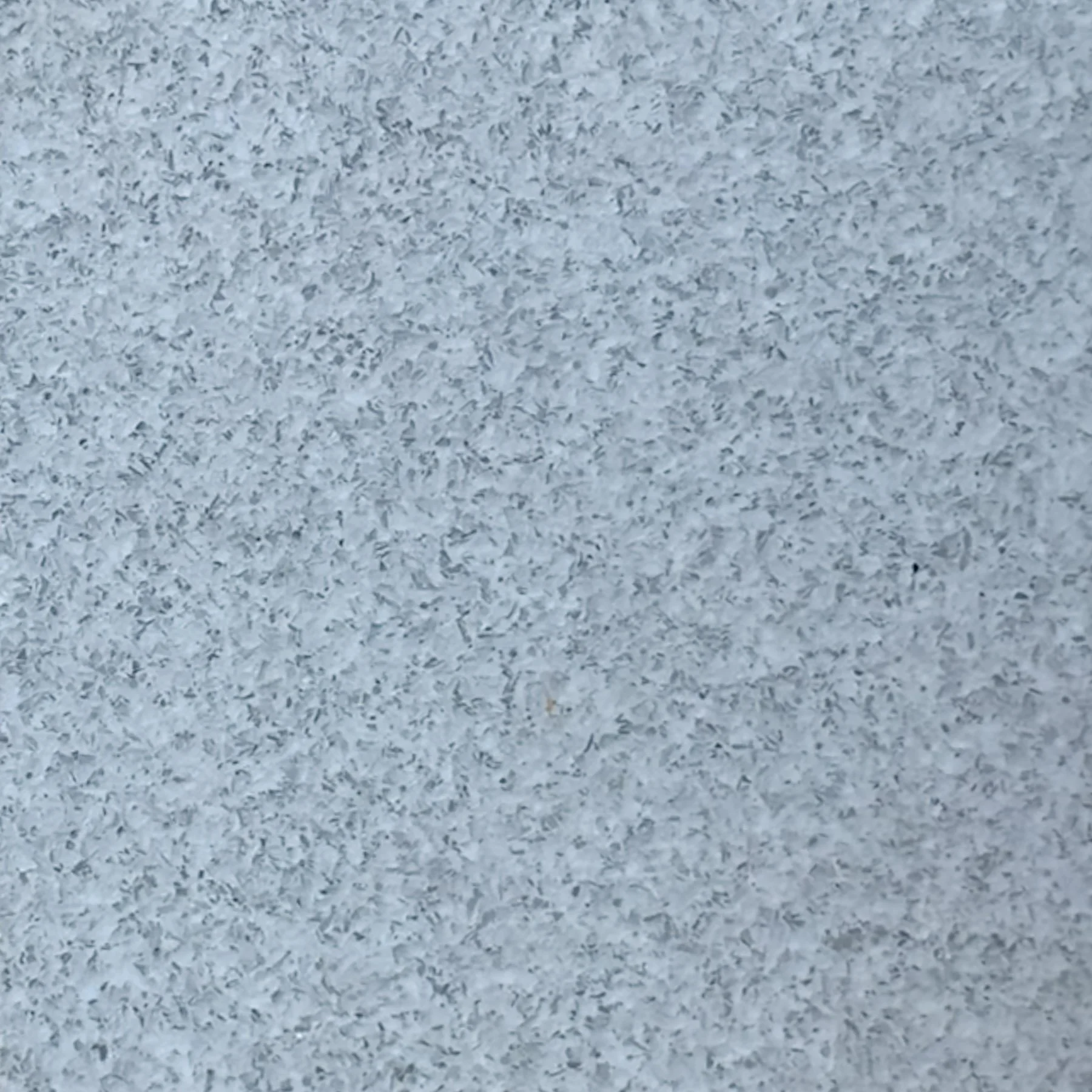
CON-ice.0303
CON-ice.0411
condition: drt
Multiple material variations interact simultaneously while time, heat, and deposition influence the outcome. The condition emerges through accumulation, reaction, and controlled instability. Evidence of those interactions remains visible within the finished surface.
drt = Thrown down thick and dirty.
Multiple material systems are introduced simultaneously and allowed to react through time, heat, and deposition. Evidence of those interactions remains visible within the finished surface.
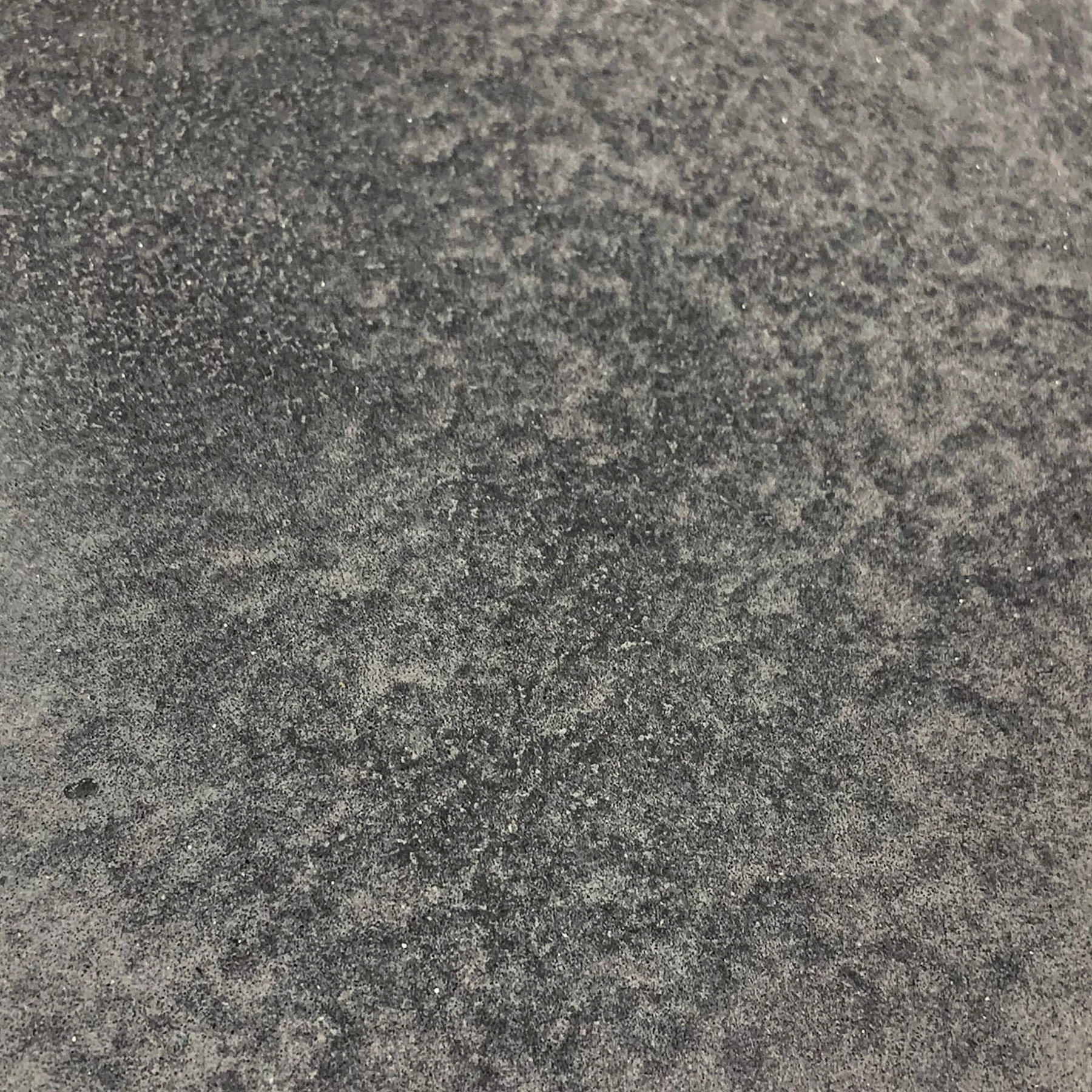
CON-drt.xxxx
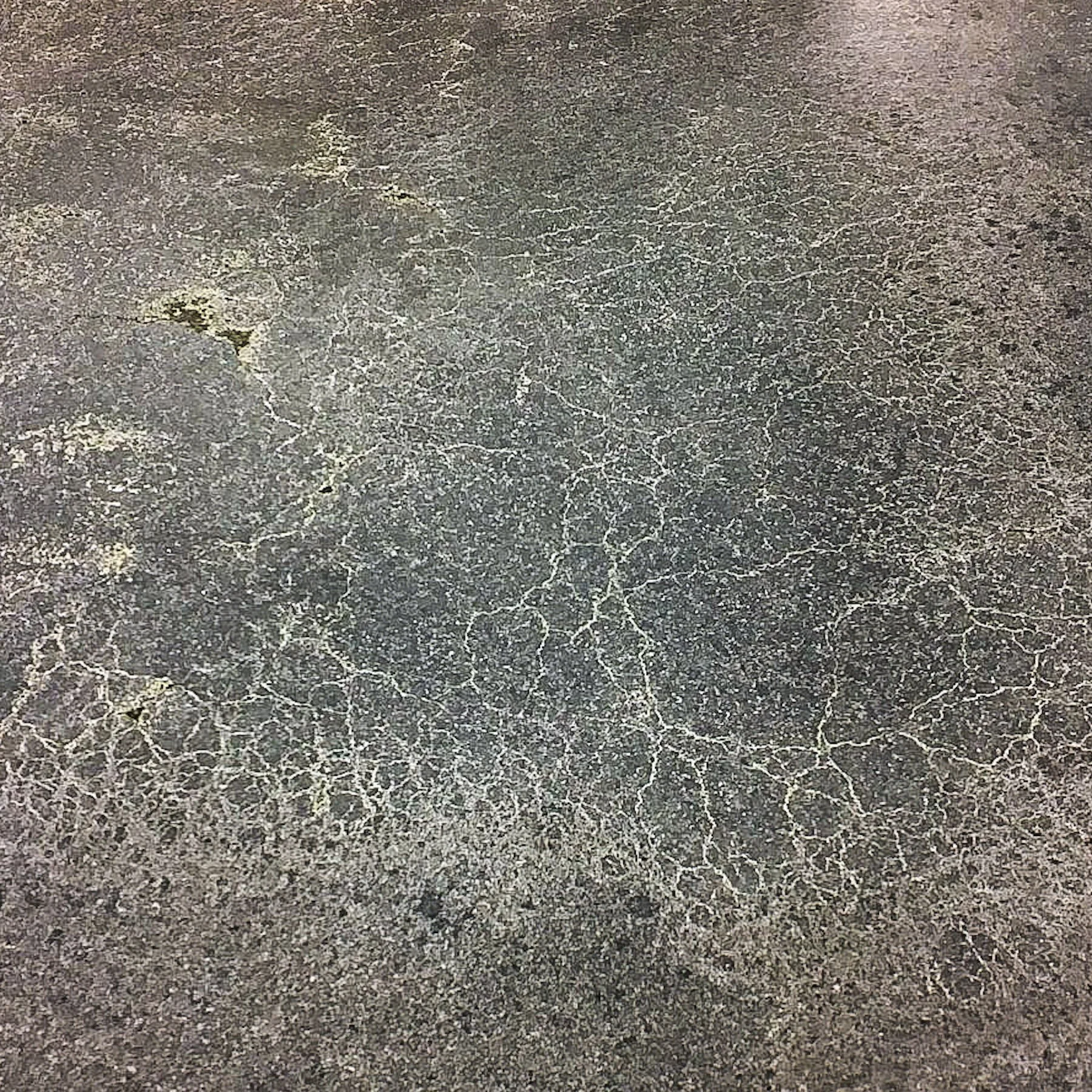
CON-drt.xxxx
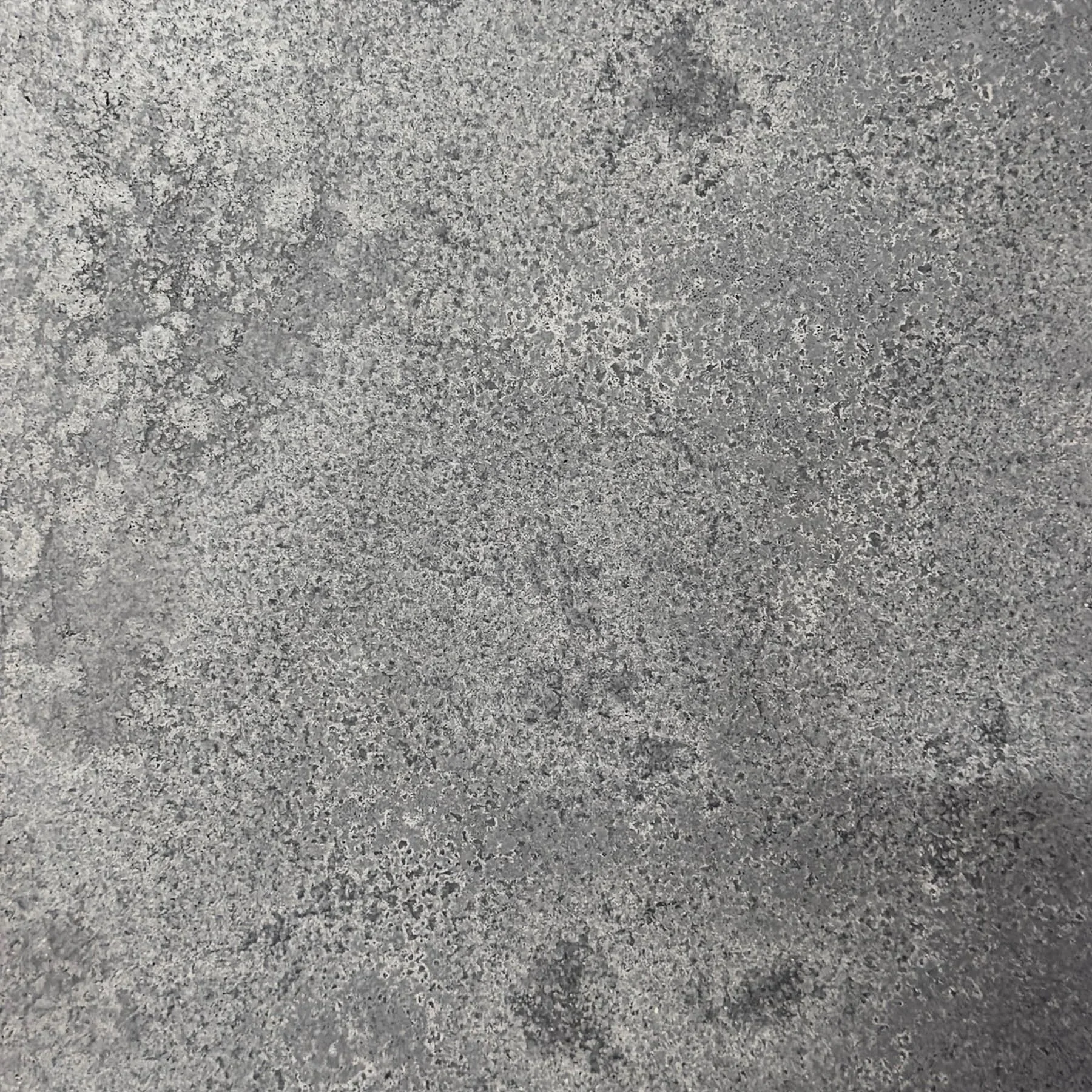
CON-drt.xxxx
condition: oxd
Material changes through exposure to air, moisture, minerals, and time. The condition emerges through oxidation, weathering, and chemical reaction. Color, texture, and surface character shift as evidence of that transformation accumulates within the material.
oxd = Oxidation and weathering. Material reacts with its environment, producing visible color shifts, deposits, and surface transformation.
x = secondary
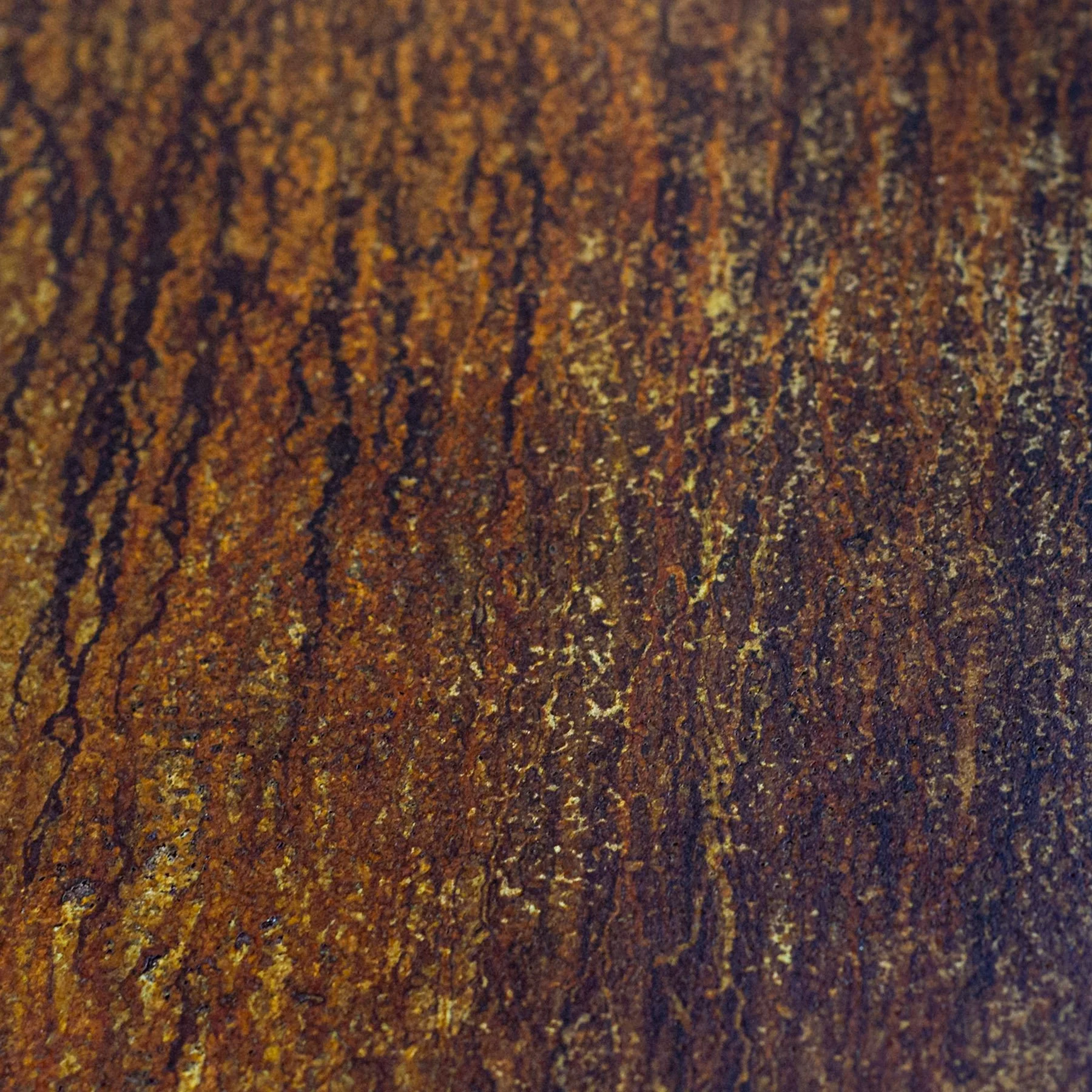
CON-oxd.xxxx
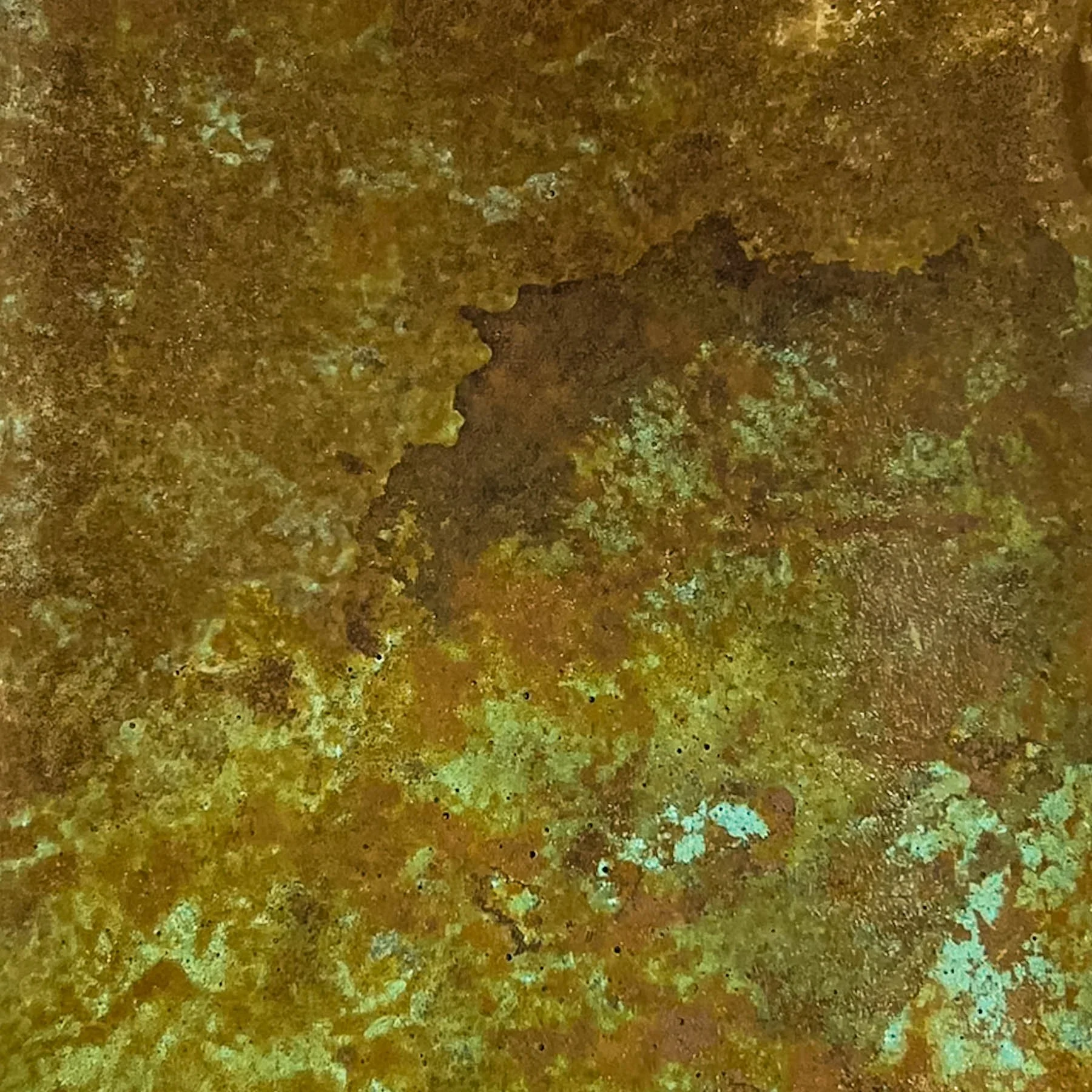
CON-oxd.xxxx
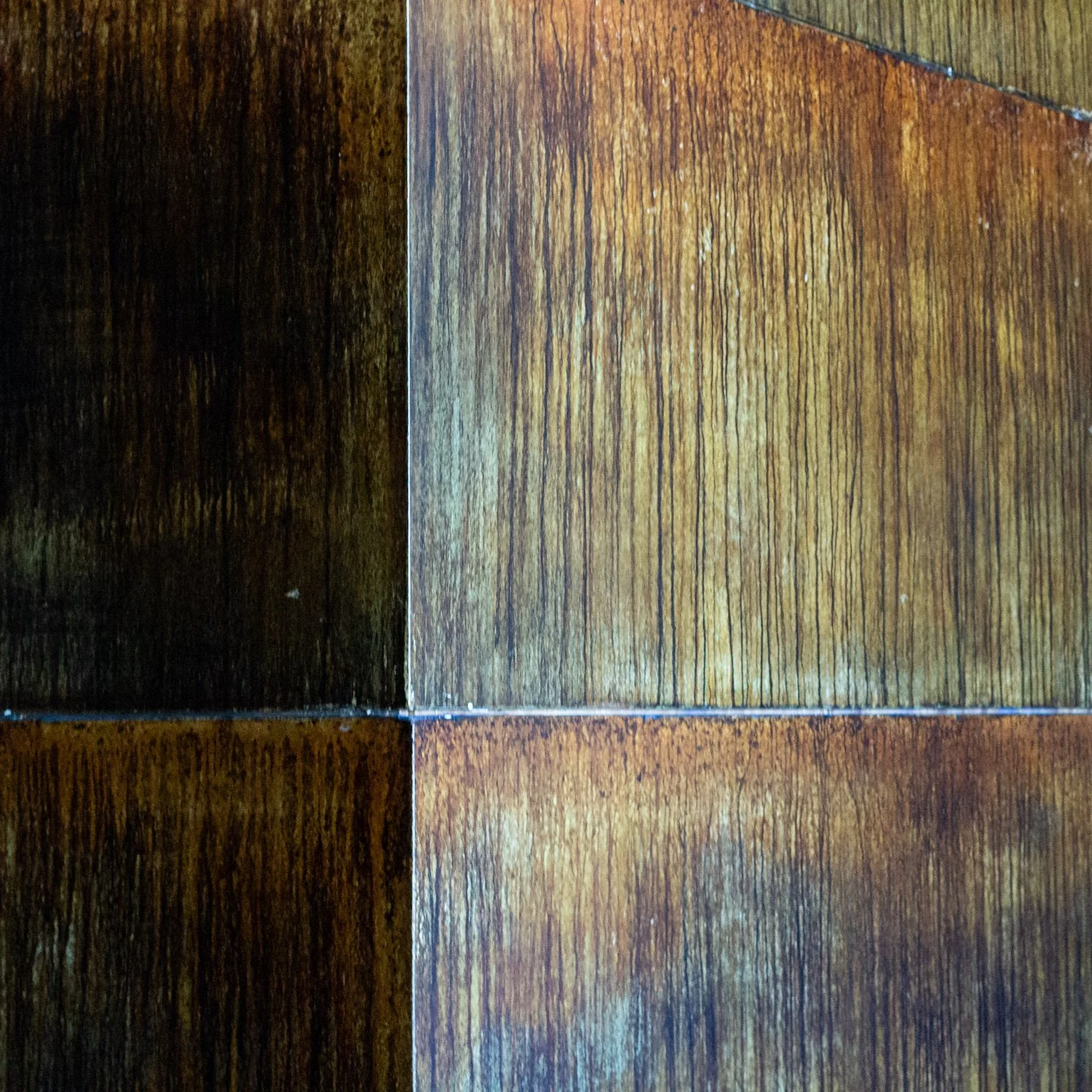
CON-oxd.xxxx
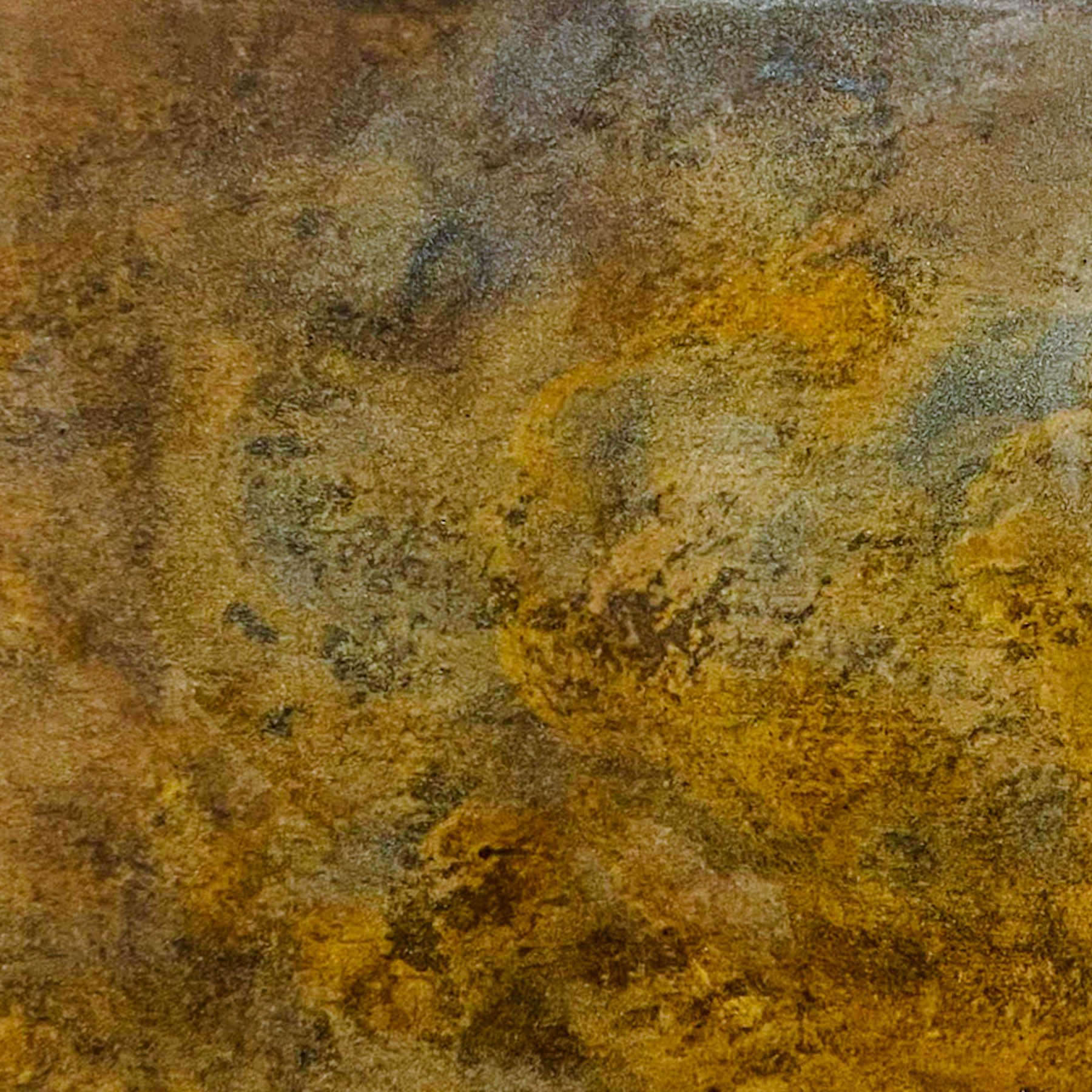
CON-oxd.xxxx
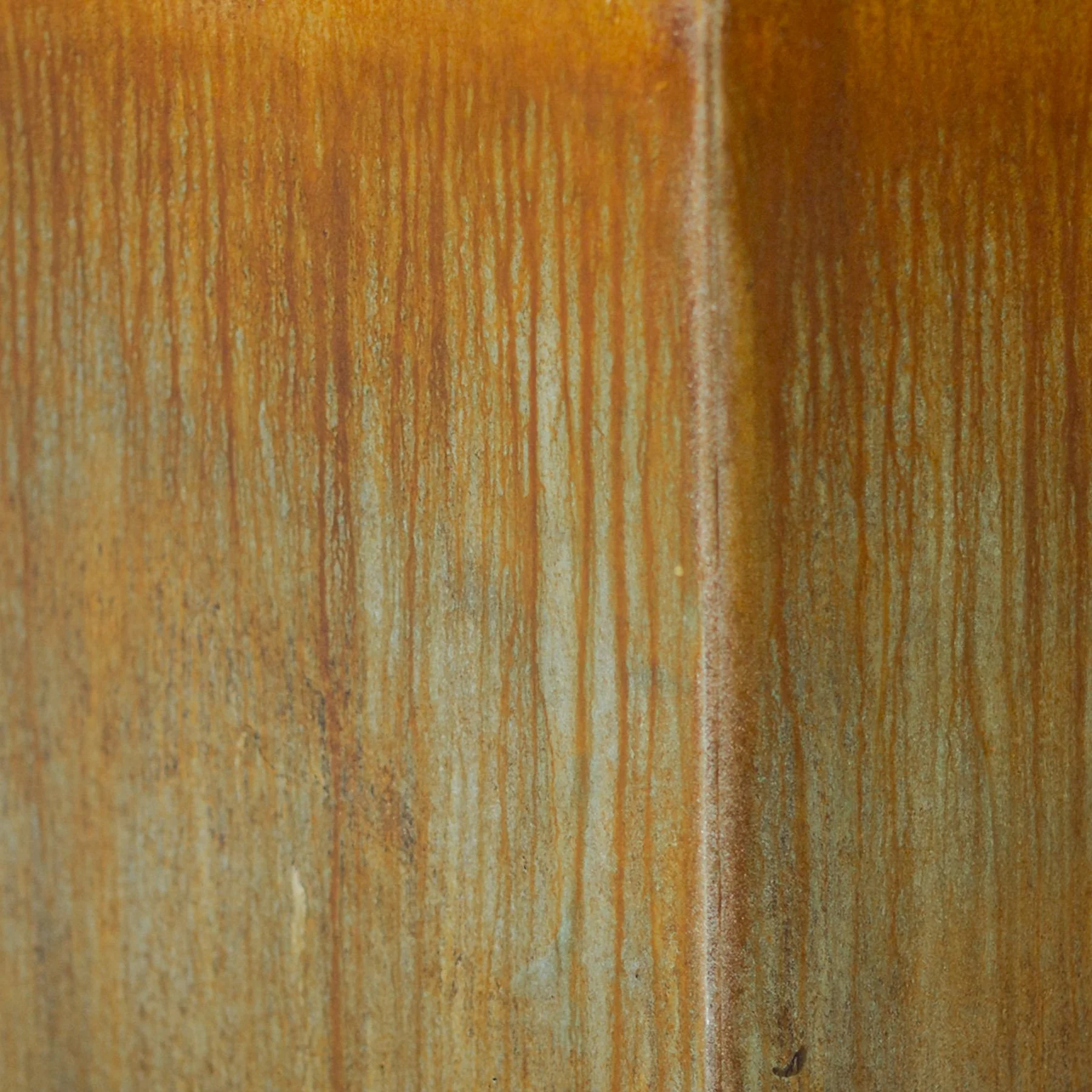
CON-oxd.xxxx
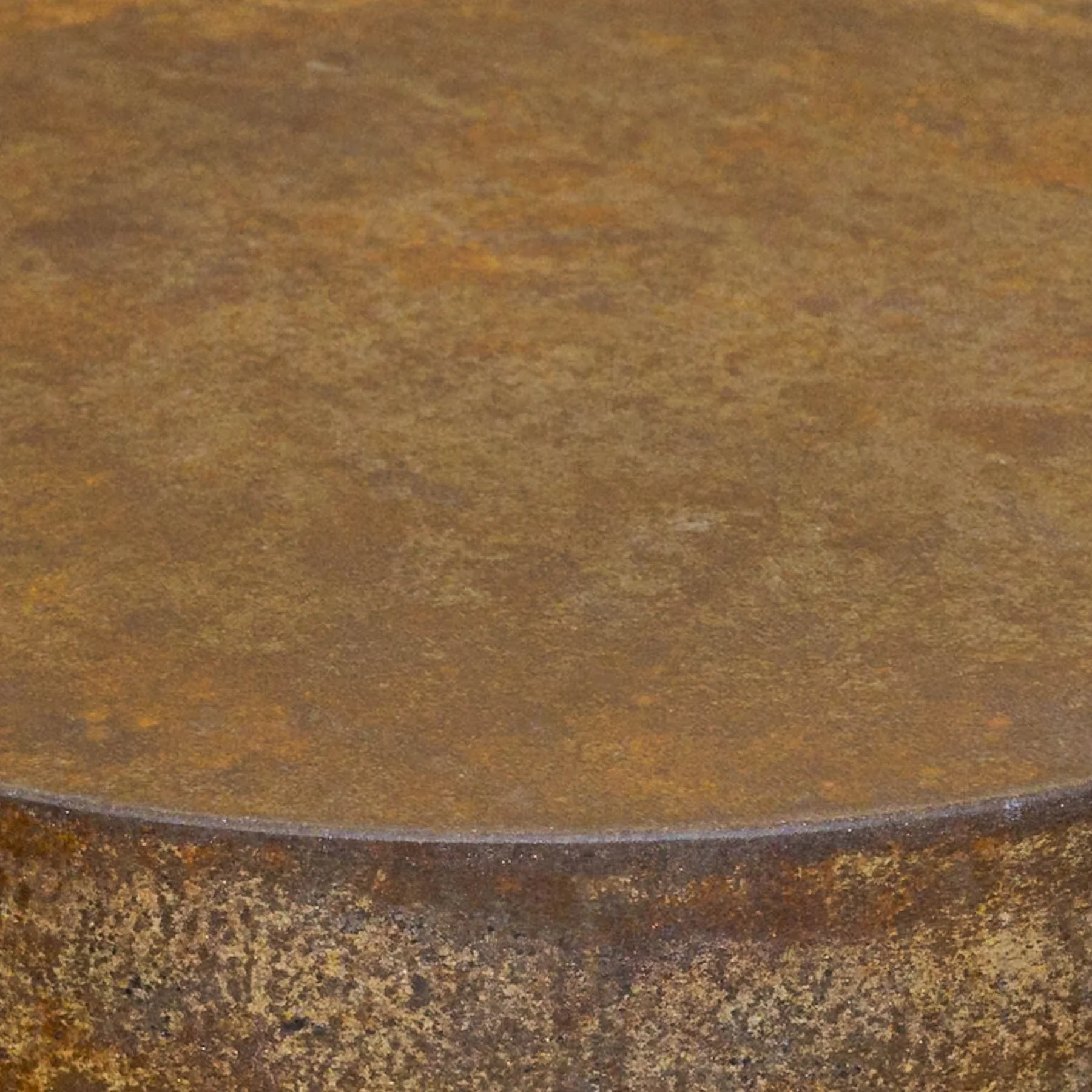
CON-oxd.xxxx
condition: raz
Material is disrupted, fractured, and recomposed. The condition emerges through the exposure, distribution, and fragmentation of mineral aggregate within the concrete matrix. Scale, density, and composition shift continuously, producing unique surface fields that reveal both structure and process.
raz = Fragmentation and recomposition. Mineral aggregate is intentionally exposed, fractured, and redistributed throughout the material field. Variations in aggregate size, density, color, and exposure produce distinct surface conditions ranging from subtle mineral expression to highly disrupted compositions.
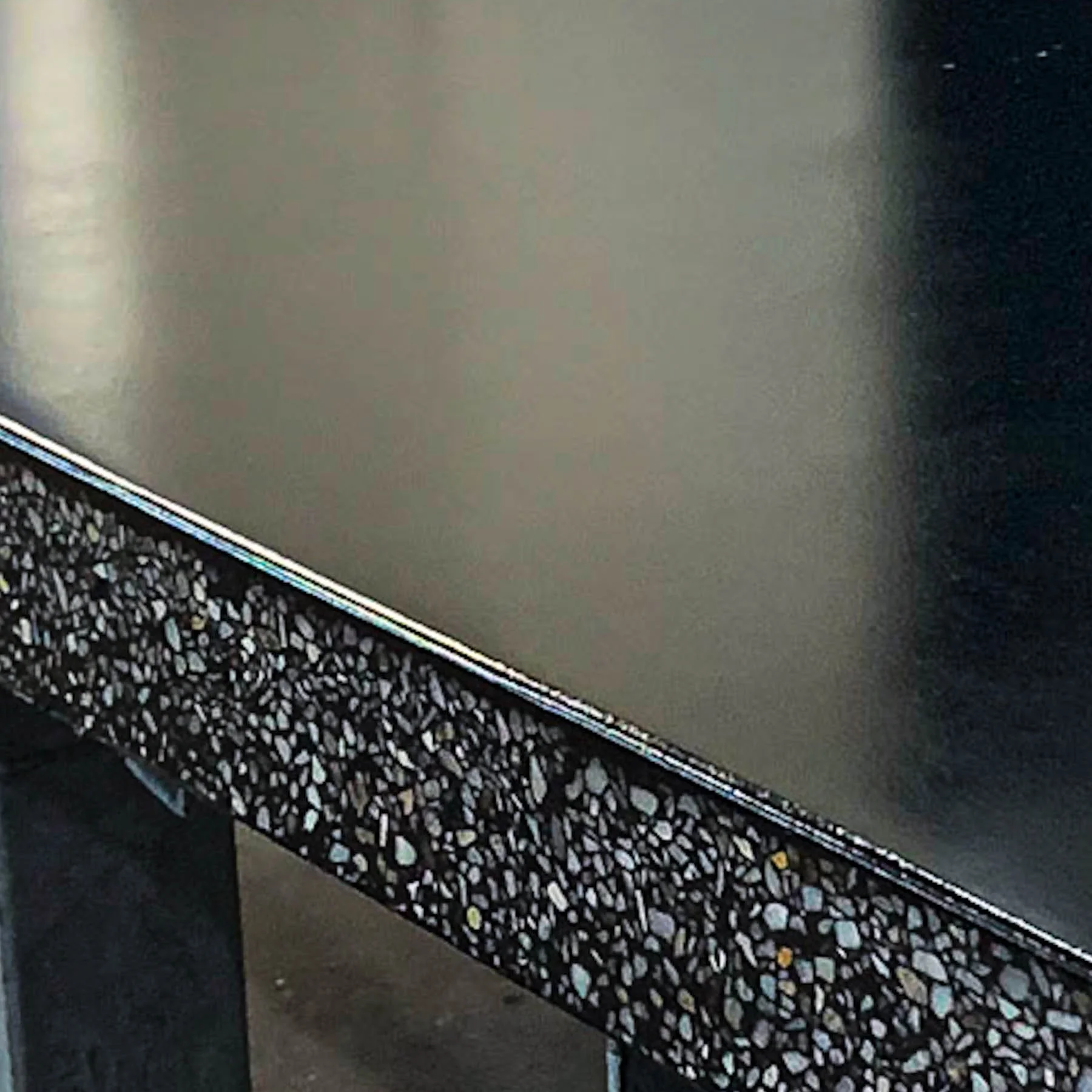
CON-raz.xxxx
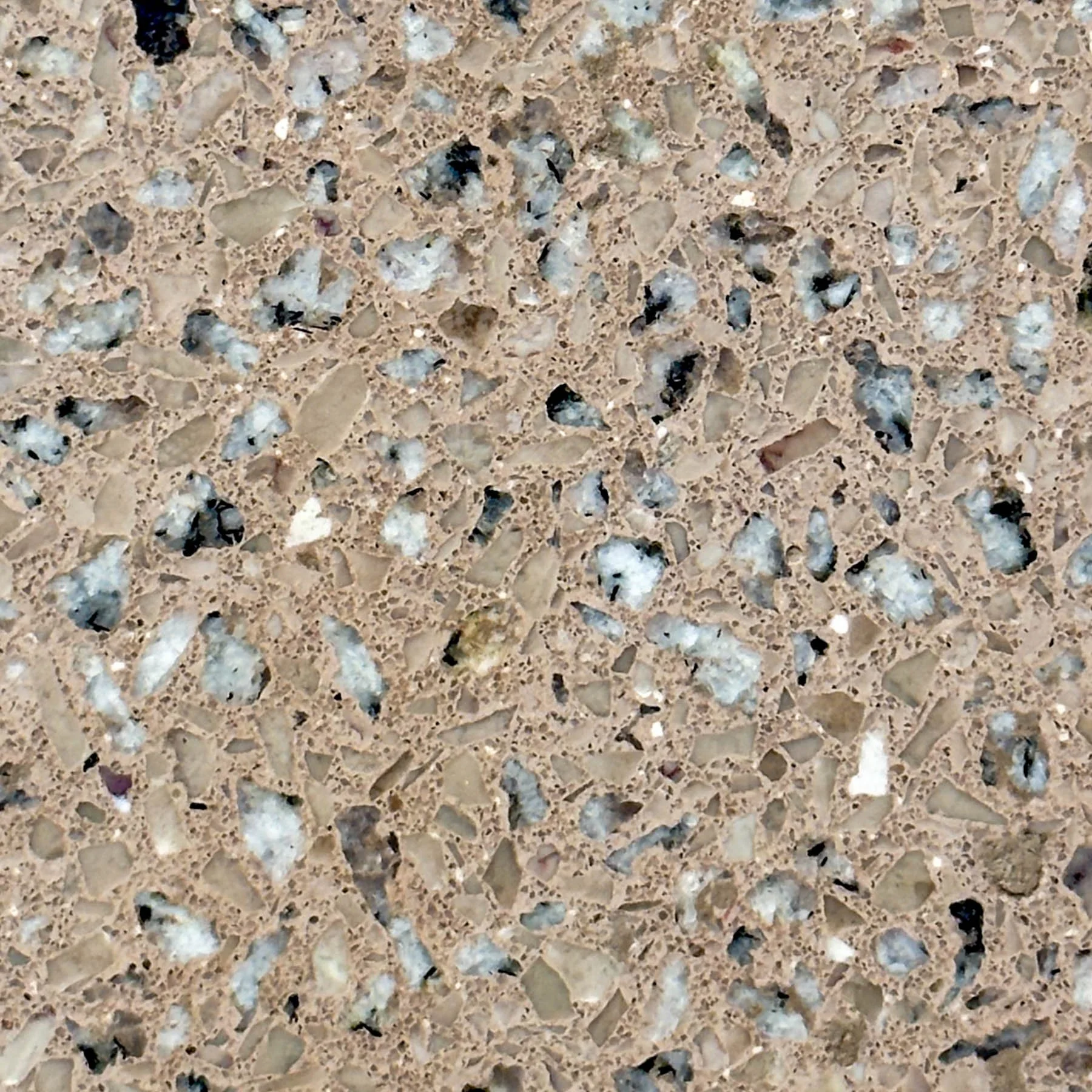
CON-raz.xxxx
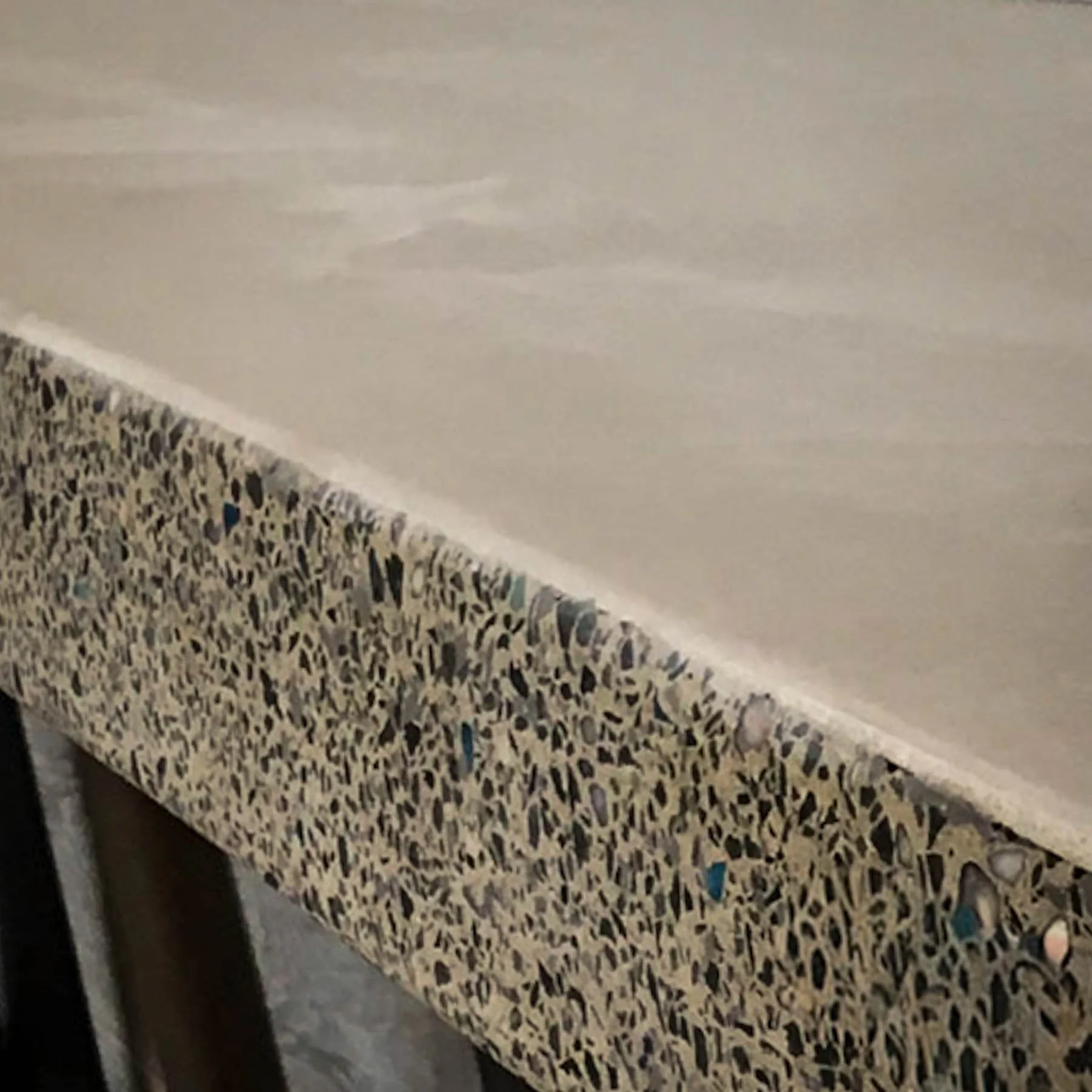
CON-raz.xxxx
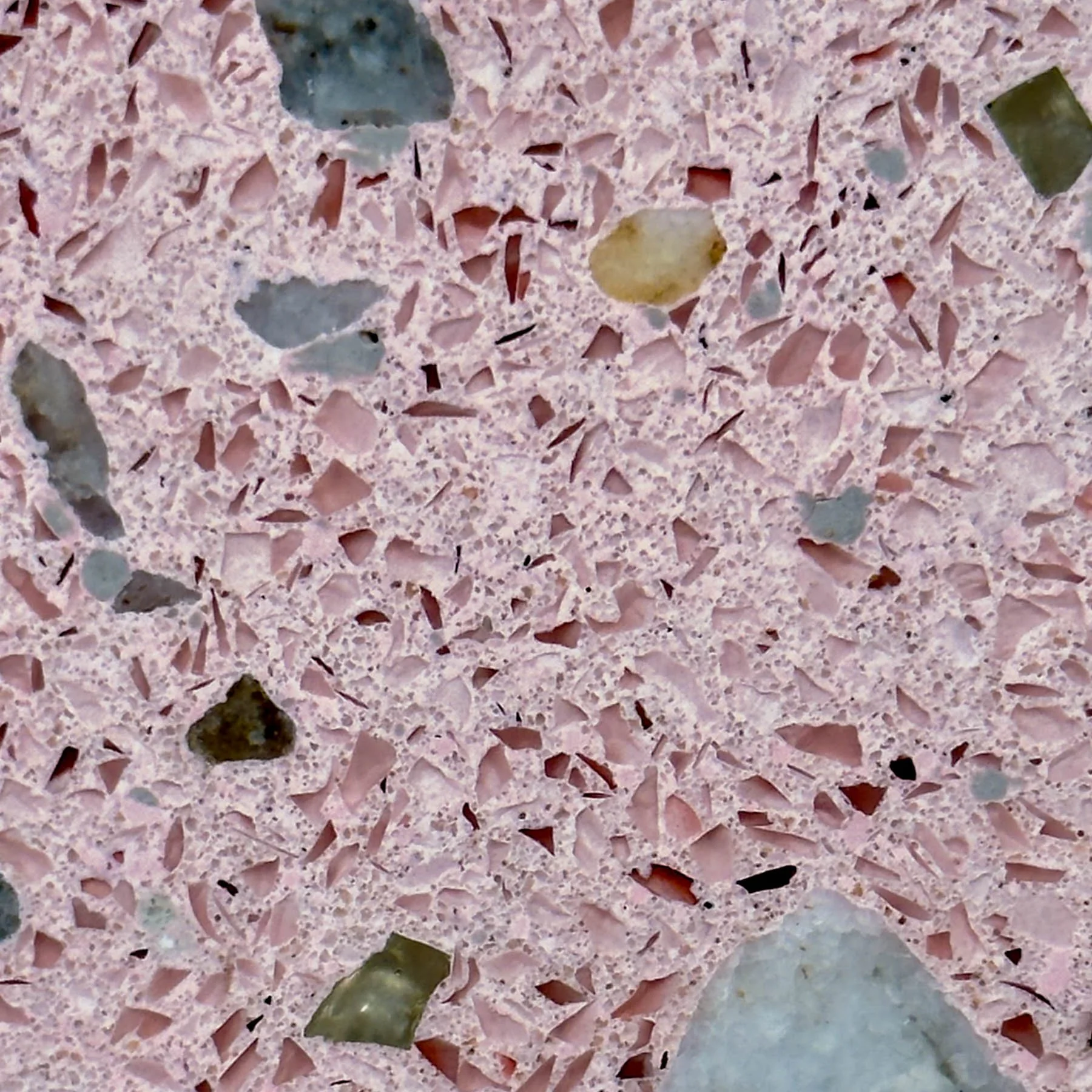
CON-raz.xxxx
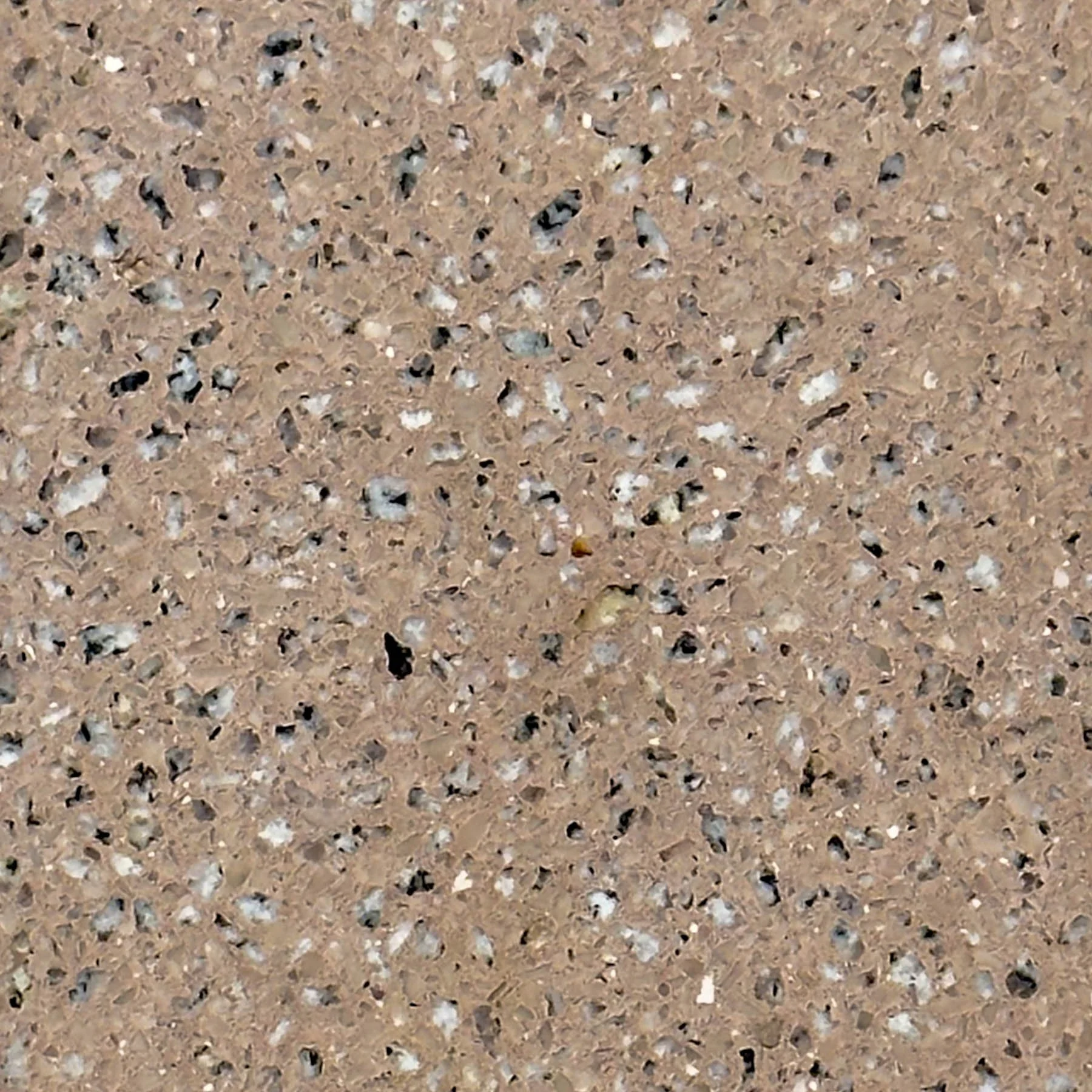
CON-raz.xxxx
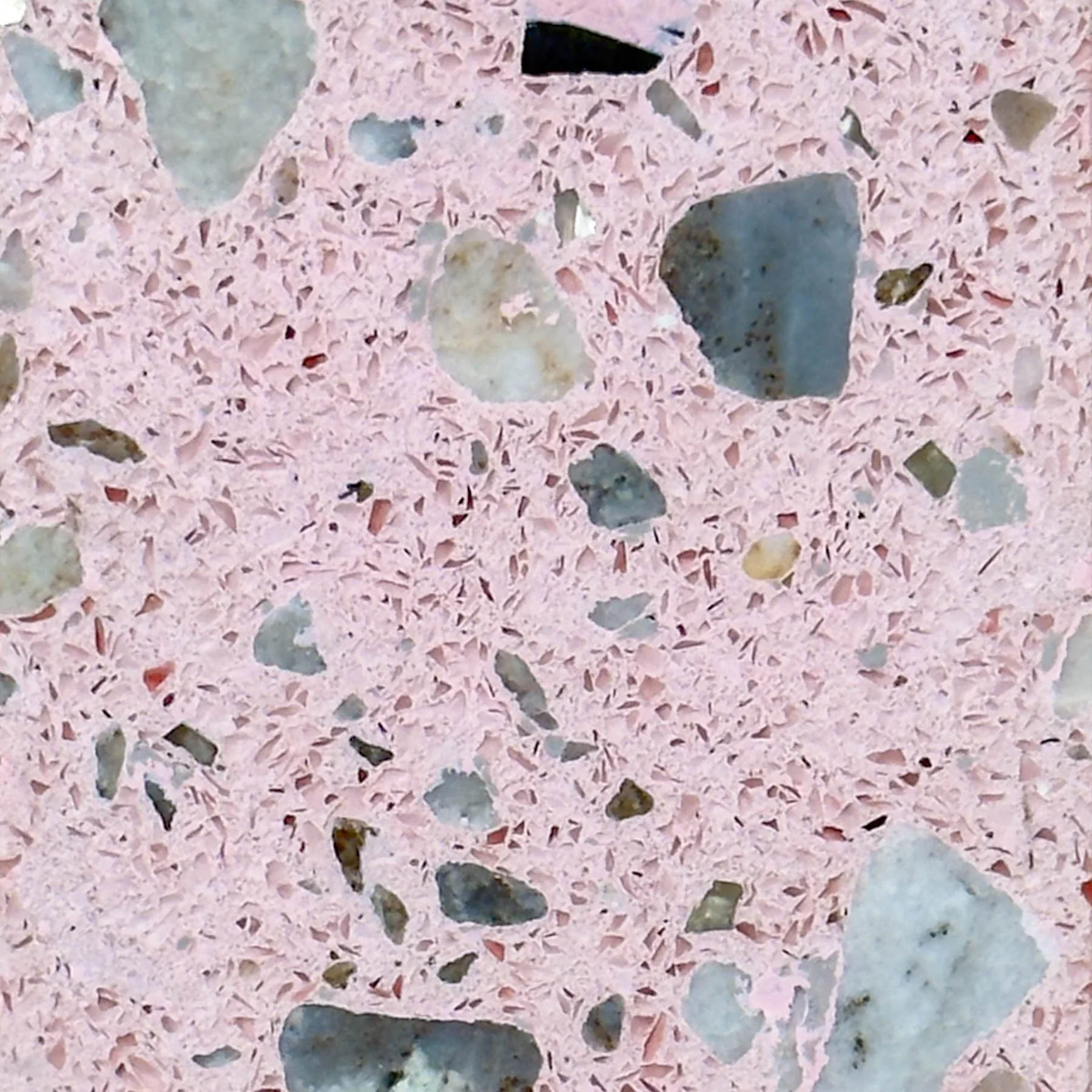
CON-raz.xxxx
Primary Integrated Colors
Primary integrated color serves as the foundational material field from which conditions emerge. The classifications below establish a simplified reference system for navigating the archive.
100–199 = Whites
200–299 = Grays
300–399 = Blacks
400–499 = Blues
500–599 = Browns
600–699 = Neons
Additional classifications and color conditions continue to evolve through ongoing experimentation, observation, and refinement. Physical samples and expanded references may eventually be released as the archive continues to grow. Until then, the examples presented here serve only as points of orientation within a much larger body of work.
![[ .0000 ]](https://images.squarespace-cdn.com/content/v1/68d6f9fcfa43eb0373c010e9/bc99fbb7-cf4d-4361-a4b3-683e7aadf7ae/tca-conditions-archive-color-classification-system-1.jpg)
[ .0000 ]
[ .0000 ]
[ .0000 ]
[ .0000 ]
[ .0000 ]
[ .0000 ]
[ .0000 ]
[ .0000 ]
[ .0000 ]
[ .0000 ]
[ .0000 ]
[ .0000 ]
[ .0000 ]
[ .0000 ]
[ .0000 ]
[ .0000 ]
[ .0000 ]
[ .0000 ]
[ .0000 ]
[ .0000 ]